

Bidfood has promoted its long-standing and highly regarded Food Innovation Manager, Martin Eshelby, to the role of Culinary Director.
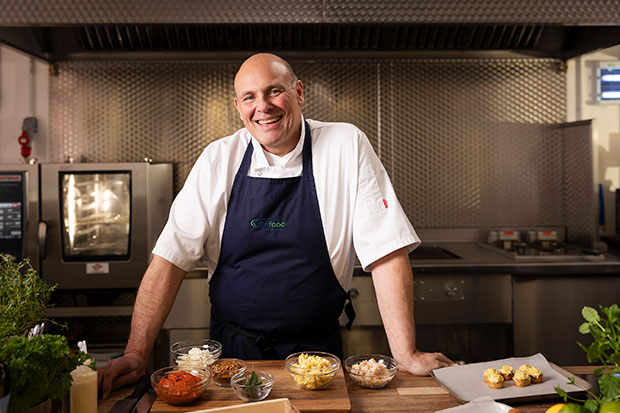
As Culinary Director, Martin will play a key role in shaping and overseeing Bidfood’s culinary vision.
Drawing on his extensive experience, he will showcase the business’s strong food credentials, whilst continuing to work closely with manufacturing brands, leading new product innovation, and supporting the development of Bidfood’s annual food and drink trends.
Martin Eshelby, Bidfood Culinary Director, tells Wholesale Manager his goals for the new role and what he thinks will be the key food and drink trends for 2026.
Martin, congratulations on being appointed Culinary Director. How do you feel about the new role?
Thank you. I’m genuinely honoured and excited to take on this role. It’s a fantastic opportunity to build on the strong foundation we already have and continue raising our culinary standards, while staying true to our core values of creating a great food business.
What goals do you want to achieve in the role?
My main goal in this role is to continue developing high-quality, innovative food products that meet both consumer needs and business objectives. I want to use my knowledge and creativity to enhance product quality, flavour, nutrition, and consistency, while ensuring everything is commercially viable.
I’m also keen to keep learning, staying on top of the latest food trends, ingredients, technologies, and collaborating with our cross-functional teams. There’s always something new to learn, and I want to bring that insight into every product we create.
Tell us about your background, where you have worked before and what you have achieved at Bidfood?
My career began at catering college, where I spent three years learning the fundamentals of becoming a chef. During this time, I completed a placement at Swallow Hotels, which really opened my eyes to the realities of the profession. It was challenging work, and I truly learned from the bottom up, often spending hours peeling kilo after kilo of potatoes.
My first role was with the airline Thomas Cook, working in the kitchen preparing food for staff. I later moved into hospitality, securing a position in the kitchen at The Lanesborough in Hyde Park. It was a tough environment, but I was fortunate to work under the guidance of renowned chefs Paul Gayler and Chris Galvin, which proved invaluable to my development.
Eventually, I decided to step away from the fast-paced demands of the kitchen and transition into product development. I began this next chapter at Oscar Mayer before moving to Bidfood, where I have just celebrated my ten-year anniversary.
What do you think will be the biggest food trends of 2026?
Healthy eating and wellness are set to keep growing in 2026. Our Bidfood 2026 Food & Drink Trends research shows that nearly half of consumers are actively trying to reduce their intake of ultra-processed foods when eating out, highlighting a clear shift towards wholefoods and better-for-you options on menus.
Consumer expectations will continue to shape what operators and wholesalers need to deliver, with value, quality, experience and brand remaining top priorities. Value, in particular, goes beyond price – people want food that feels worth it, combining quality, innovation, nutrition and an enjoyable experience. Many consumers are also increasingly quality-led, with a strong willingness to pay more rather than see standards drop.
Experience plays a growing role too, with diners drawn to venues that offer something different or memorable, whether that’s standout food, immersive environments or social experiences. At the same time, trusted brands and fresh concepts remain important, with collaborations and reinventions helping brands stay relevant.
Finally, the rise of weight-loss injections such as Mounjaro is already influencing eating-out habits. As usage increases, we expect growing demand for smaller portions, sharing plates and wholefood-focused dishes – an area where operators will look to wholesalers for the right products and support.
What do you think will be the key drink trends this year?
We’re seeing a really exciting evolution in the tea market. Traditional brews are being reimagined into bold, modern drinks that are highly customisable, allowing operators to experiment with global flavours and innovative formats. Tea isn’t just a comforting hot drink anymore, it’s becoming a beverage that blends refreshment, wellness, creativity, and visual appeal.
For operators, this is a big opportunity. There’s a growing group of consumers who are curious about flavour and love trying something new, and tea now offers plenty of ways to meet that demand. From vibrant cold brews and sparkling teas to wellness-infused blends and Instagram-worthy presentations, the tea market is giving operators the chance to create on-trend drinks that stand out and engage customers in a fresh way.
Are consumers becoming more adventurous in their food choices?
Absolutely, I think consumers are becoming more adventurous, particularly when it comes to flavours. Our 2026 trends show that people are open to global influences and bolder tastes, but they still value the reassurance of familiar formats. It’s about evolving comfort rather than abandoning it, offering exciting new flavours while keeping dishes approachable.
Do you think the foodservice industry will be able to cope with rising costs and food inflation?
Rising costs and inflation are definitely putting pressure on the foodservice sector, and 2026 is shaping up to be a tough year. With VAT unchanged, higher wages, business rates, as well as rising energy and food costs continuing to climb, many operators—especially smaller independents, will have to make difficult choices, from raising prices to streamlining operations and in some cases reducing hours or staff.
That said, operators who can balance these pressures while delivering value, quality, and on-trend offerings are still able to make a success of the year. It won’t be easy, but those who adapt strategically can still thrive despite the challenges.
Is health an important consideration for consumers when dining out?
Yes, whether that’s lean meat, oily fish, or plant-based protein. Many consumers want to eat healthier but often need a bit of guidance, which creates a real opportunity for the out-of-home sector.
A smart approach is to work with people’s existing preferences rather than expecting them to always choose traditionally ‘healthy’ options. By subtly enhancing familiar dishes with more wholefoods, extra vegetables, fibre, protein or plant-based protein, operators can make healthier eating both enjoyable and accessible, without making customers feel restricted.
What countries or regions of the world will be the most important in terms of cuisine?
I think in 2026 we’ll see diners really embracing cuisines from a variety of regions from across the world. As highlighted in our 2026 Food and Drink Trends report, Korean, Malaysian, and South American flavours are all gaining traction. People are excited by bold, authentic tastes such as Korean bibimbap and bulgogi, Malaysian laksa and satay, or South American ceviche, arepas, and stews from Brazil, Peru, and Colombia. It’s not about abandoning familiar dishes, but about giving customers a sense of adventure and discovery. Operators who bring these flavours to menus in approachable ways can really tap into that curiosity and offer something exciting without feeling too far out of comfort zones.
Comments are closed.