

Parmigiano Reggiano took Wholesale Manager all the way to Italy for a tour of their production and tasting of different maturations at Latteria Santo Stefano dairy.
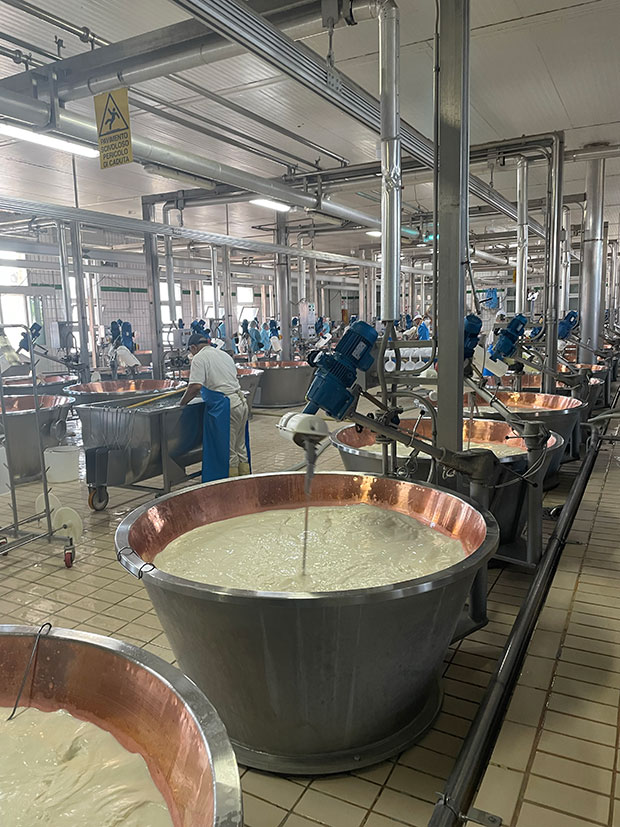
Often referred to as the king of cheeses, Parmigiano Reggiano is one of the oldest cheeses in the world. It has a history that goes back almost 1,000 years yet it is still loved in kitchens across the world today. With 43% of all Parmigiano Reggiano exported worldwide, global appetite for Italy’s most famous cheese has never been stronger and the UK is firmly at the heart of that demand.
More than four million wheels are produced each year, crafted by around 300 dairies and supported by over 2,000 farms. Yet despite the impressive scale, Parmigiano Reggiano remains resolutely artisanal, made the same way today as was when it was first produced by monks in the Middle Ages.
The cheese’s PDO (Protected Designation of Origin) status means it can only be produced in a small area of Northern Italy including the provinces of Parma, Reggio Emilia, Modena, Mantova (to the right of the River Po) and Bologna (to the left of the River Reno). Every stage, from milking the cows to maturation and even grating and packaging must take place within this region under strict EU PDO regulations.
The cows follow a carefully controlled natural diet, largely grown within the production area. Silage – fermented grass or maize stored for long periods and commonly used in intensive dairy farming – is banned and additives are forbidden. The result is a milk that is shaped by the local microflora of the region, which is something that can’t be replicated outside it. Made using just three ingredients: milk, salt and rennet, Parmigiano Reggiano is frequently highlighted as a rich protein and calcium source among those looking for natural, minimally processed foods, and is praised for its health properties.
Thanks to its long maturation period – a minimum of 12-months – Parmigiano Reggiano is naturally lactose free, but it’s at 24-months when the cheese really comes into its own and the flavours deepen and intensify. A 24-month Parmigiano Reggiano is balanced, nutty and fruity, while at 30-months it becomes more aromatic with a stronger flavour, and when aged over 36-months, it is intense, crumbly, with a deep umami flavour.
Here’s how the flavour profile evolves across the maturation stages:
12–19 months – Delicate. Fresh and milky with notes of yoghurt and butter. Ideal shaved over salads or served in chunks with sparkling wine.
20–26 months – Balanced. Nutty and fruity with visible tyrosine crystals. Perfect grated over pasta or stirred into risotto.
27–34 months – Aromatic. More pronounced savoury depth with hints of spice and nuts. Excellent in baked dishes.
36+ months – Intense. Crumbly, crystalline and deeply umami with complex toasted notes. Best enjoyed in chunks or paired with structured red wines.
The tiny white tyrosine crystals found in older wedges of cheese are just one of the signs to look out for to ensure quality. With global demand at record levels and exports accounting for nearly half of total production, authenticity matters more than ever. Real Parmigiano Reggiano will always have the PDO logo on pack, with “Made in Italy” also clearly stated. The dotted wording “Parmigiano Reggiano” is inscribed on the rind and the name of the dairy the cheese was made in is always indicated. If it doesn’t tick all of these, it isn’t Parmigiano Reggiano. In recent years, counterfeit “Parmesan” wheels have circulated globally, attempting to cash in on its reputation, but with strict EU regulations protecting it, a cheese cannot be called Parmesan unless it is true Parmigiano Reggiano.
From weeknight pasta to weekend cheese boards, Parmigiano Reggiano continues to prove that when it comes to cheese, tradition and time make all the difference.
Nicola Bertinelli, President of the Parmigiano Reggiano Consortium said: “Parmigiano Reggiano continues to demonstrate how premium products can drive value for retailers. Consumers are increasingly choosing cheeses that offer authenticity, trusted origin and genuine quality, which have become key drivers in purchase decisions. Parmigiano Reggiano’s distinctive flavour, versatility and clear provenance are helping retailers to attract shoppers seeking products that deliver both everyday enjoyment and premium appeal, creating strong opportunities to grow value and differentiate the cheese offering.”
Parmigiano Reggiano continues to deliver strong and sustained growth in the UK market. Demand in the UK has grown by 44% over the past five years, despite ongoing household budget pressures, demonstrating the resilience of premium, high-quality products within the dairy category.
The brand is seeing consistent increases in both sales and consumption, supported by a production system that now exceeds 4 million wheels annually. Globally, Parmigiano Reggiano generates a consumer turnover of 3.96 billion euros, reinforcing its position as a key value driver within speciality cheese.
Performance is being supported by several long-term trends, including premiumisation within cheese, the growing popularity of Italian cuisine and increasing demand for versatile, ingredient-led meal solutions. We’re seeing that consumers continue to trade up for products that offer genuine quality, provenance and versatility across cooking, dining and snacking occasions.
Comments are closed.