



World Foods remains one of the most dynamic and resilient sectors within UK grocery. Recent industry analysis estimates the UK World Foods market to be worth almost £3 billion, with forecasts suggesting it could more than double by the early 2030s, delivering compound annual growth rates in excess of 8%.
Crucially, the category now benefits from near-universal engagement. Industry data indicates that around 95% of UK households purchase World Foods, underlining how firmly global cuisines are embedded in everyday eating habits.
With demand extending well beyond core ethnic shoppers into the mainstream, World Foods continues to outperform many traditional grocery categories and represents a significant, long-term growth opportunity for wholesalers and retailers.
Growth in World Foods is being driven by several interlinked trends. From a cuisine perspective, West African, South Asian (including Korean) and Latin American foods are among the strongest-performing and fastest-growing segments, reflecting both demographic change and rising mainstream interest in new flavours.
George Phillips, Commercial Director at Wanis, comments: “At a product level, rice remains a cornerstone of the category, with around 88% of UK households consuming rice regularly. Social media platforms such as TikTok have played a role in accelerating interest, with Tropical Sun Golden Sella rice becoming a standout performer this year and a genuine grocery “hero” SKU.
“One of the most prominent consumer trends in 2025 has been electrolytes and hydration, supporting continued growth in Coconut Water. Tropical Sun’s canned Coconut Water formats are performing particularly well, suggesting consumers increasingly view Coconut Water as a better-for-you soft drink alternative, rather than solely as a health-and-wellbeing product.”
Consumers are also increasingly dialling up flavour, using sauces and marinades as an accessible way to explore world cuisines, alongside core seasonings and spices to recreate authentic global dishes at home.
Snacks remain a long-standing strength in convenience and impulse retail, with World Snacks such as Coconut Peanuts and Plantain Chips continuing to thrive as an easy entry point to global flavours.
Wanis is the UK’s largest distributor and wholesaler of World Foods, and continues to highlight West African cuisine as the fastest-growing segment within the category. Census data shows significant growth in the number of Brits with direct West African heritage, feeding both cultural influence and consumption trends.
Increased cultural visibility and rising consumer curiosity are driving West African cuisine’s appeal well beyond diaspora communities, supported by wider availability across retail and foodservice.
South and East Asian cuisines, particularly Korean, are also growing rapidly, driven by social media, street food culture and greater access to authentic products. Latin American cuisines remain strong, benefiting from both established diaspora communities and growing mainstream appeal across flavours, formats and brands.
Best-selling products across the Wanis portfolio reflect both staple demand and flavour-led growth. Tropical Sun, the UK’s leading World Food brand, continues to perform strongly, with key lines including Golden Sella Rice, Coconut Water (with “with pieces” variants outselling natural), Plantain Chips and Milk Powder.
Within Tropical Vibes, the 1L tetra format is performing particularly well, while core bottled flavours such as Fruit Punch, Mango Carrot and Ocean Blue continue to deliver consistent sales.
The Tropical Sun tea range is also accelerating following its re-design, supported by growing consumer interest in health and wellbeing and recognition through Great Taste Awards.
Recent launches continue to reflect the breadth and diversity of the World Foods category. These include Tropical Sun Natural Coconut Water, Tropical Sun Honey Jerk Seasoning and Tropical Sun Green Seasoning, all of which are trading well.
The latest addition to the range is Tropical Sun Soy Drink, positioned as a drink in its own right rather than a traditional dairy alternative. Wanis has also launched a new range of functional teas, including Cold & Flu variants.
Other notable launches include Tropical Sun Hot Honey, Organic Acacia Honey, and a premium Drinking Chocolate made with West African cocoa.
Tropical Sun remains the leading brand distributed by Wanis and continues to perform strongly within the World Foods category. The brand has grown into a £55m+ retail sales brand, underlining both its scale and its relevance across an increasingly broad consumer base.
“World Foods offers a significant opportunity for wholesalers, but success depends on range clarity and relevance. The category’s breadth can be challenging, particularly for those new to it, making a well-defined core range essential,” adds Phillips.
“Location and local demographics remain critical. A strong foundation of proven best sellers should be supported by additional lines tailored to the customer base served. Authenticity remains key, with consumers increasingly seeking genuine flavours, quality and provenance.”
In 2026, Tropical Sun celebrates its 30th anniversary and this milestone will be supported by an increased investment in a comprehensive, multi-channel marketing programme. This includes targeted radio advertising, outdoor formats such as billboards, 6-sheets and bus sides, branded shopfronts for independent retailers, in-store sampling and demonstrations, and sponsorship of key cultural events.
The brand also maintains a strong social media presence, working with influencers to engage consumers and reinforce the World Food message.
“World Foods performs best when treated as a destination category. Where space allows, grouping World Food products together improves visibility and enables wholesalers to carry a broader, more effective range,” says Phillips.
“Stocking key World Food brands, supported by a strong core range of best sellers, builds confidence for retailers. Effective merchandising and regular promotion are essential, particularly given the important role retailers play as advocates for the products they stock.”
Wanis works in close partnership with wholesalers to maximise World Food sales. This includes defining strong core ranges, regularly promoting selected drive lines, increasing the availability of price-marked packs, and offering smaller case configurations suited to independent retailers.
Support is further enhanced through branded displays, bays and tower ends, and Wanis’ dedicated merchandising service. As a one-stop shop for World Food brands, Wanis also sources specific products for customers where required and continues to invest in its wholesale team to better support existing partners and develop new relationships.
Shezad Aslam, Managing Director of Aagrah Foods, comments: “With more than half of British consumers (54%) now cooking from scratch more often (Mintel), there’s a growing opportunity for brands to inspire shoppers with authentic and exciting world food ingredients.
“Premiumisation is shaping the world cuisine category more than pure adventure. Shoppers are increasingly discerning, rejecting mainstream sauces they perceive to be lacking depth, overly processed, and of poor quality. With hospitality still under pressure, brands that deliver a credible ‘fakeaway’ are the ones enjoying growth; restaurant-quality Indian cooking sauces are having a moment, as shoppers trade across from their favourite curry house, seeking authentic, premium Indian cooking sauces that help them recreate the restaurant dishes they love, at home.”
Pre-family and young families tend to stick to the dishes they know and love, like Tikka Masala and Butter Chicken, whereas older or post-family shoppers are more likely to explore the more adventurous flavours. “And while there’s a niche consumer curiosity for lesser-known regional Kashmiri dishes, the majority are still comfort-driven,” adds Aslam. “We have seen this trend play out directly, with sales of our Indian cooking pastes up more than 40% year-on-year. Aagrah Tikka Masala remains the runaway success (+50% yoy), while our recently launched Aagrah Butter Chicken is already one of our most popular flavours. It’s Aagrah’s second best-selling paste after Tikka Masala.”
Indian, Chinese and Mediterranean are still the dominant cuisines however more and more people are now trying other Asian cuisines (eg Korean, Thai, Japanese) as well as Caribbean and West African.
“One of our best-selling products is the Tikka Masala cooking sauce – a creamy and aromatic fusion of a rich tomato base and warming spices. It’s the most popular due to its high recognition factor – Tikka masala is a dish shaped by British taste and it’s become a cultural symbol for multicultural Britain,” says Aslam.
“It’s also an anchor for the category. It brings customers into the category and into our brand who then explore more regional and bolder flavours such as Hydrabadi and Achari.”
The latest addition to the Aagrah Tarka portfolio is the Butter Chicken Tarka Paste, which originates from Delhi and delivers an aromatic smooth base with a hint of fenugreek. Made with slow-cooked onions, tomatoes, garlic, ginger and Aagrah’s signature blend of spices, this dish has a gentle heat without the spice of a Hydrabadi or Lahsen and is perfect for the whole family.
All Aagrah’s pastes are cooked using the Tarka method, just as an Indian chef would cook them in a restaurant by first frying the spices on a high heat. This ensures that our pastes are punchy and packed with flavour to rival any Indian restaurant.
Unlike a finished curry sauce, which offers a heat-and-serve solution, a tarka paste provides the foundation for a freshly cooked dish. It allows consumers to engage more in the cooking process while delivering consistent, authentic flavour and giving consumers the flexibility to customise their own recipes.
“Brands need to think beyond just the staples. Consumers seek more authenticity and higher quality but also want convenience – which means authentic meal solutions that are easy to prepare,” advises Aslam. “Wholesalers need to think about variety in their ranges and ensure they’re offering consumers something different. While the staples will continue to drive the highest volumes, variety for retailers is what will stand out for consumers.
“Stock a broad, well-curated range to give retailers enough variety, such as a good combination of the core staples and some exciting growth SKUs. I would also like to see wholesalers educate and sample where possible, especially for less familiar cuisines. Also, help retailers merchandise better and be able to educate their buyers on why certain brands/SKUs are trending.”
World foods and category expert Golden Acre Foods is relaunching Ashoka, one of the UK’s most trusted South Asian and ethnic food brands, with a fresh new look and a clear message: Made for Desis, by Desis. With decades of loyalty among South Asian communities and a growing footprint in mainstream, Ashoka is entering a new phase designed to drive better shelf standout, deepen cultural resonance and expand its appeal among younger shoppers.
The refresh includes a more premium, unified packaging across Ashoka’s frozen, ambient and pickle ranges which reflects the bold, flavourful experience inside, while reinforcing Ashoka’s updated positioning. “This isn’t just a facelift,” comments Rebecca Cutter, Marketing Director at Golden Acre Foods. “Ashoka has always been a category leader and all about flavour and authenticity. The new look helps us to tell that story more clearly and helps to better connect with a new generation of shoppers.”
Ashoka’s relaunch is backed by a nationwide integrated marketing campaign with activity planned across TV, OTT platforms, YouTube and other digital media, retail and outdoor. The focus is on areas with strong South Asian communities and the goal is to drive awareness, trial and repeat purchase.
Activity includes TV, YouTube and outdoor ads, messaging tied to food rituals and festivals, in-store and online activation to boost visibility and sales, diaspora-led content, influencers and UGC, with sampling and recipe content to drive trial.
Ashoka’s range, which spans handmade parathas and samosas to ready to eat biryanis, meal kits, pickles and chutneys, continues to deliver bold and authentic taste and flavours, now with a refreshed look that is ready to lead growth in the ethnic and world foods aisle.
Oli Sampson, MD of frozen food distributor Central Foods, comments: “Global cuisines are capturing the interest of an ever-wide audience. There has probably never been a time in the UK when there has been so much diversity when it comes to international dishes.
“Whether it’s speciality products from Europe or from more far-flung places, the appetite for food from around the world has never been greater.”
As a leading frozen food distributor, Central Foods offers a wide range of globally-inspired products.
Its KaterBake Belgian waffles are a great product that can be served in different ways to suit a range of tastes. Individually wrapped for convenience and suitable for vegans, they are ideal to help satisfy the demand for out-of-home breakfast and brunch – a growing eating out occasion.
Mintel revealed that 29% of consumers ate breakfast or brunch out of the home in 2021 and that jumped to 35% in 2023. A report by Kantar last year described breakfast as the fastest-growing out-of-home eating occasion, increasing by 13.7% year-on-year. It’s the 35-54 year-old demographic that’s most keen on eating breakfast out of home, but Gen Z is showing the fastest growth.
“Asian cuisine is currently a major force in driving food trends across Instagram and Tik Tok with certain dishes frequently going viral,” adds Sampson. “This has helped raise the profile in the UK of products like bao buns and Indian snacks – something that wholesalers should take note of when stocking products for their foodservice customers.”
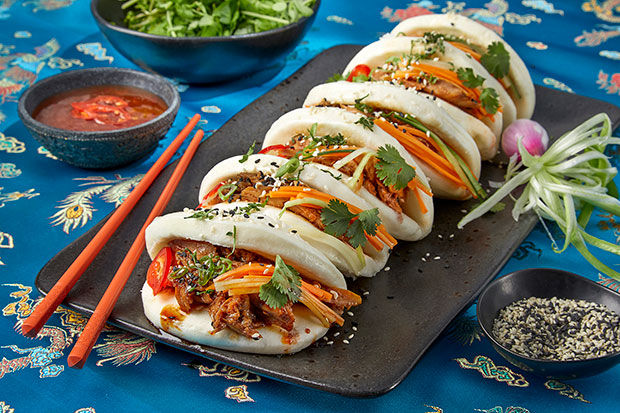
Bao buns have taken the street food scene by storm in recent years and their popularity has now spread across pretty much the whole of the foodservice sector.
According to Growth Market Reports, the global bao buns market reached $1.43 billion in 2024 and is expected to hit $2.77 billion by 2033 – suggesting that the popularity of bao buns is no flash in the pan.
“Adaptable, versatile and convenient to use, they’re just the sort of product that can help make life easier for foodservice operators. They are a shining example of how world foods can be launched into the foodservice sector in the UK and very quickly become almost a ‘staple’ menu item in certain types of venues,” says Sampson.
“Central Foods regularly promotes its world food products – from the KaterBake! Belgian waffles through to the Menuserve Indian snack section – to highlight their availability to wholesalers and the foodservice sector.”
Akash Mittal, Brand Manager (World Foods) at leading speciality food importer and distributor Empire Bespoke Foods, comments: “The overall value of packaged world foods is estimated at £1.4bn, growing at 10% + (Kantar). In recent years, the category’s worth has surged as consumers seek both authenticity and accessibility – wanting restaurant-style experiences that fit into busy lifestyles. We see how convenience stores have improved their world food aisle with more products and more shelf space. Innovation in ready-to-eat and heat-and-eat formats, combined with the rise of premium sauces, condiments and fusion products, has redefined how world foods are perceived. This evolution positions the world food category not just as a trend, but as a key pillar of modern convenience blending flavour exploration with ease and speed.”
World food is no longer a niche market – there is a clear link between the increase of at-home occasions and the type of cuisine on our plates. Cuisine-curious, time-poor consumers are becoming increasingly adventurous, looking for bold, authentic flavours and regional diversity, especially with the rise of at-home cooking occasions – but they’re also seeking quick inspiration and involved preparation through scratch cooking within world foods.
A strong range of world food product formats and a balanced array of cuisines can perform particularly well in this channel. Nearly half of world food sales are coming from cooking sauces and pastes, condiments and ingredients while ready to eat meals are also gaining more sales which shows a balance between scratch cooking as well as convenience (Kantar).
Indian and Tex-Mex are among the top two cuisines accounting for the vast majority of world food sales and growing year-on-year. Authenticity and convenience is key with 45% of UK consumers believing products inspired by a specific Indian region feel more authentic (Mintel).
There is also a growth in Asian cuisines including Japanese, Vietnamese (both growing at 15%, Kantar), Thai (growing at 10% (Kantar), Korean (21% of sales are coming from NPD within Korean world food (Mintel), Singaporean, and Filipino. Niche cuisines such as Malaysian, Sri Lankan and Lebanese are also increasingly popular.
“This reflects the growth we’re seeing with our Asian cuisines brands S&B (Japanese cuisine), Master Cook (multi-cuisine), Thai Taste (Thai cuisine), Nem Viet (Vietnamese cuisine), Malay Taste (Malaysian cuisine), ideal for time-poor consumers who want traditional and authentic, fast and convenient pan-to-plate solutions which don’t compromise on quality,” adds Mittal.
The popularity of cooking Japanese food at home is also on the up, partly due to the perceived health benefits of the cuisine, consumer familiarity with dishes like ramen noodle and Miso soups and the relative ease with which it can be prepared.
Barnaby MacAdam, Development Chef, Paulig PRO, comments: “One of the most notable trends we’re seeing right now is the growing demand for bold, authentic international flavours. Research from Bidfood’s 2025 trends survey reveals that more than half of consumers (53%) want to try the latest food trends. This is backed by HRA Global’s study, which shows that 73% of consumers are likely to buy new products inspired by international cuisine (HRA).”
In fact, 90% of consumers are now open to trying global flavours (HRA), highlighting the need for operators to offer more exciting, adventurous options across their hot food menus. Consumers are also looking for more fusion-style food, with 57% revealing they’d like the option to mix and match multiple cuisines (Mintel). This is a golden opportunity for wholesalers to help operators stand out – by tapping into the global gastronomy trend by offering ranges from around the world.
“We believe that embracing global flavours, whether through fusion concepts or fresh takes on classic dishes will be key for staying ahead in a competitive market,” adds MacAdam. From Indian-Italian mashups to modern Korean favourites and Eastern Mediterranean-inspired bites, the potential to create crave-worthy, worldwide food offerings is vast.”
Korean cuisine is currently the fastest-growing in the UK, driven by the wider cultural wave of K-Pop, K-Dramas and an explosion of interest in K-Food. Consumers are embracing the cuisine’s signature balance of heat, umami, sweetness and acidity, with 89% of people saying they want to eat more Korean dishes (Santa Maria). The cuisine’s blend of tradition and creativity – and its sense of fun – is driving demand with no sign of slowing down.
Alongside this, Eastern Mediterranean food is rapidly becoming a standout favourite. In fact, 86% of UK consumers say they want to eat more of this cuisine when dining out (Paulig PRO) – proof that it’s far more than a fleeting trend. Diners are drawn to its bold spices, vibrant colours and naturally health-forward identity. 44% of consumers identify as health-conscious and 76% are willing to pay more for high-quality ingredients (Lumina). It’s a cuisine with a winning combination of flavour and balance, while its versatile pantry – from za’atar to preserved lemon – also works brilliantly in fusion formats.
Meanwhile, Indian cuisine has been a British favourite for decades, and its evolution continues. What began with the classic Friday-night “ruby murray” has now evolved into all-day, everyday staple. Indian cuisine in the UK is steeped in a rich history of migration, adaptation, and culinary evolution – where traditional recipes travelled across continents, then reshaped themselves to fit new kitchens and new palates. Today, contemporary Indian cuisine is outpacing Mexican, Thai and Greek in growth (Circana), and appears across QSR, street food, grab-and-go and retail chillers. Gen Z is at the heart of this shift, embracing playful mashups and modern formats such as butter-chicken “naanwiches”, Andhra-spiced hash browns and tikka-spiced salads.
Across all three regions, the unifying theme is clear: UK consumers are hungry for authenticity, adventure and global fusion. For wholesalers, this presents a major opportunity. Stocking Korean condiments, Eastern Mediterranean marinades and contemporary Indian spices will be essential for helping operators tap into these fast-moving trends – and keep pace with Britain’s ever-curious palate.
“Wholesalers should focus on driving innovation through globally inspired products that bring both flavour and excitement to operators’ menus. With the eating-out market becoming increasingly crowded, operators are actively searching for versatile, vibrant ingredients that help them stand out – and wholesalers can add real value here,” says MacAdam.
“By incorporating on-trend mainstream cuisines such as Contemporary Indian, Eastern Mediterranean, Mexican and Korean, wholesalers can position themselves as the go-to flavour partner for customers looking to refresh their offer. These cuisines aren’t just popular; they provide accessible ways for operators to diversify menus without complicating back-of-house operations.”
Scott Dixon, MD The Flava People, comments: “The World Foods category is surging, up 8% year on year versus total UK grocery which has grown by 5% in the same period. According to the NIQ Homescan Survey 2025 (‘Conscious Eaters and Green Divide’), 92% of the UK shop the World Foods category both online and instore, and 60% of shoppers buy from World Foods monthly, with the heaviest buyers in the 18-34 years age bracket. 48% of these shoppers buy every other week from the category. World Foods are most popular with mid to high affluence households.”
World foods category growth is driven by a number of factors including adventurous home cooking of authentic and diverse world cuisines and economic factors which are reshaping the way we eat and shop. The pandemic and rising living costs have transformed UK dining habits. With home cooking on the rise and restaurant visits in decline due to consumers feeling the pinch, dining in has become the new dining out. Consumers are tasting the world without leaving their kitchens and home cooks are evolving, as are the dishes they cook. With a booming appetite for global flavours, the World Foods category has never been so relevant.
This has resulted in the category gaining strong momentum as consumers seek diverse, authentic flavours in easy-to-use formats that encourage confident experimentation; all while keeping value and health top of mind. 66% of households are experimenting with new recipes and cuisines every month. More consumers are cooking from scratch, but short-cuts are still preferred, boosting demand for ingredients like sauces, spice mixes and meal kits. Health-conscious consumers are gravitating toward world cuisines seen as more akin to their lifestyle and health agenda. And, although price is a consideration, value for money is imperative with quality, authenticity and functionality taking precedence.
Global tastes are reshaping expectations as travel and social media expose consumers to new flavours. Curiosity is high, with internationally inspired food now a key driver of innovation and menu development both in and out of home.
Comments are closed.