



QuornPro has launched an expert-led talk designed to help caterers better understand ultra-processed foods (UPFs) – and confidently explain why not all UPFs are an area of concern.
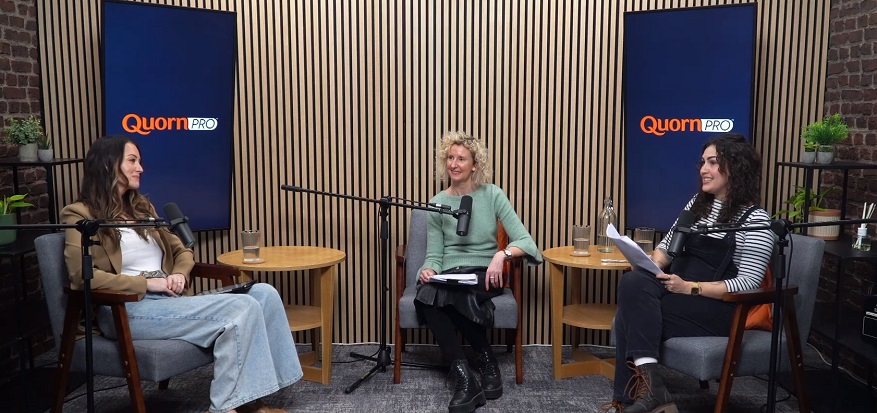 With the term “ultra-processed food” dominating headlines and sparking questions from parents, teachers, patients and catering teams alike, the session brings together leading voices in nutrition and foodservice to provide clarity, context and practical communication tips.
The 45-minute, conversation features Dr Emma Derbyshire PhD, Public Health Nutritionist and CEO of Nutritional Insight, Kelly Worthy, Global Foodservice Controller at QuornPro and Tess Kelly, Policy & Partnerships Lead at Quorn
The session sets out to educate QuornPro customers on the nutritional benefits of Quorn mycoprotein, to break down myths surrounding UPFs, and to provide simple, practical guidance on how operators can communicate this with their customers.
Bringing nuance to the UPF conversation
During the discussion, Dr Derbyshire explains the origins of the NOVA classification system and highlights that there is no universally agreed definition of UPFs. She notes that much of the evidence linking UPFs and health outcomes is observational and that UK dietary guidance continues to focus on overall dietary patterns, such as those outlined in the Eatwell Guide.
The session also explores how foods as varied as baked beans, wholemeal bread, tofu and mycoprotein can fall into the same UPF category as confectionery and sugary drinks under certain systems – underlining the need to look beyond processing alone and consider overall nutritional profile.
Importantly for caterers, the talk clarifies the distinction between the NOVA classification and the UK Nutrient Profiling Model (NPM), which assesses foods based on their nutrient content per 100g and underpins High in Fat, Sugar and Salt (HFSS) policy.
On this point, Tess explained that good nutrition is a crucial factor for Quorn. She said, “Something that I’m really proud of is that across our Quorn portfolio, 95% are classed as non HFSS. That’s remarkable and for me, it really shows our dedication to our health research and translating all those great benefits through into our actual product range.”
Explaining what Quorn really is
A key focus of the talk is helping operators clearly explain what Quorn is and how it is made. Kelly Worthy Global Foodservice Controller at QuornPro explained Quorn’s key ingredient, mycoprotein, is a complete protein made from the naturally occurring fungus Fusarium venenatum and grown using fermentation – a process comparable to that used in bread, yoghurt or beer production.
The session also highlights that Quorn mycoprotein is:
- A complete whole protein containing all nine essential amino acids
- High in fibre, providing around 6g per 100g
- Low in saturated fat and cholesterol-free
- Backed by more than 40 years of research into mycoprotein including clinical trials demonstrating benefits for cholesterol reduction, blood glucose markers and muscle protein synthesis.
“Isn’t Quorn a UPF?”
The talk tackles head-on one of the most common questions from customers: is Quorn an ultra-processed food?
As Kelly explains: “Our products do go through a level of processing, however the UPF term simply reflects the method of production, not the nutritional value of the finished product. Quorn mycoprotein is high in protein and fibre, low in saturated fat, cholesterol-free and recognised in UK Eatwell Guide.”
The session also reinforces that processing exists for a reason and that some processed foods – including fortified cereals, gluten-free products and medical nutrition products – fulfil important nutritional roles.
Tess added: “I would love to see the conversation start to move into a more positive space of what we should be including in our diet, rather than creating a lot of anxiety for people about what they should avoid.”
Supporting confident conversations
As Emma commented: “The key thing to remember is that not all processed foods are created equal.”
Operators are encouraged to look at the nutritional profile, scientific evidence and the role of ingredients within a balanced diet – rather than relying on headlines alone.
Tess concluded: “When customers ask about UPFs, be open, be honest, and explain why you’ve chosen Quorn – keep to the facts rather than the sensational headlines or misinformation we are exposed to at the moment. It’s important that we talk more about responsible food processing, and how we can help serve food that’s ultimately better for people and the planets, which is our purpose as a brand.”
The full recording is available on QuornPro’s YouTube channel –
https://www.youtube.com/watch?v=xGZeez5zogk&feature=youtu.be
Comments are closed.