

Spectrum Foodservice began as a single market stall in 2001. A quarter of a century and three warehouses later, the firm has built a reputation for supplying high-quality soft drinks, snacks, and other foodservice essentials with a focus on speed, efficiency and great customer support.
Providing a next day delivery service to ensure clients receive their goods quickly and easily, the team of 10 dedicated members go above and beyond to meet the needs of clients.
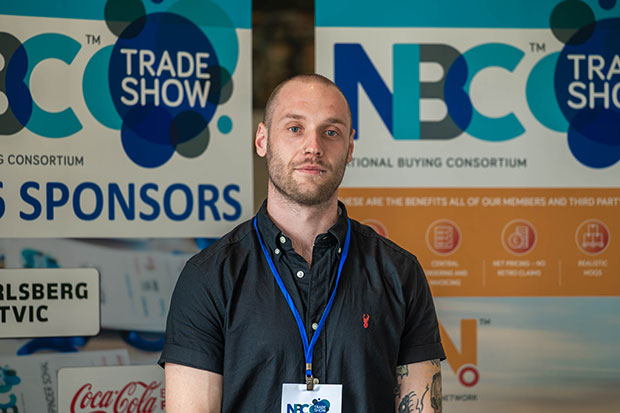
Joe Marlow, Managing Director of Spectrum Foodservice, who is also Vice Chairman of NBC, spoke to Wholesale Manager at the group’s tradeshow about the biggest challenges he has faced as a wholesaler and how the foodservice industry has changed in recent years.
What’s your perception of the NBC Tradeshow?
It seems a lot bigger than the other years, we have done really well to fill the room. I think that there was a waiting list for the suppliers, which is quite rare. I have been to every one of the NBC Tradeshows for six years and this is by far the biggest and busiest that we’ve seen.
What do you think is the future of the show? Are you expecting to grow from here?
Yes, absolutely. I think this is the last year we will be in this venue, we have outgrown it, and with the number of suppliers we have at the show now, it’s just going to get bigger and bigger.
Tell us about the history of Spectrum Foodservice.
Spectrum Foodservice has been growing since 2001. We used to be called the Candy Box, until last year, and we’re an ambient foodservice company supplying a lot of education, secondary schools and sixth form colleges. We also supply contract caterers, major distribution centres, a lot of Jiffy van companies, golf clubs and snack vans.
What made you want to get into wholesaling?
Family. My dad started the business in 2001 as a market stall. When I was five or six, he said “come work on the market stall with me.” I went through school, and as soon as I turned 16, he said “come work with us and learn the business.” I worked under my dad for 13 years, until he retired about four years ago. Even my grandparents had shops in York. So it’s been a full family affair.
Who are your customers?
Education is half our business, being secondary schools and colleges. The other half is contract catering – snack vans, distribution centres, call centres, hospices and golf clubs. So we have quite a big range – no NHS contracts and no retail, but we’re into every other sector.
What are some of the biggest challenges you’ve faced as a wholesaler?
Consolidation has been difficult. Going back years, you would have accounts with every single manufacturer and very low minimum orders. It was very easy to deal with whoever you wanted to deal with, but a lot of them in the last four or five years have said we’re going to move to a six pallet, 12 pallet, 24 pallet minimum, which is great for some people, but we are on the smaller side. With some suppliers you can say, “yeah, great, I’ll have 26 pallets.” But others you are never going to touch. So that has been difficult, but that’s where the buying group has really helped. If the minimum order is six pallets and we want three, we can consolidate the order with another NBC member. It has been difficult, but the group is massively helping.
What are your goals for what you want to achieve with the business?
The goal is to continue growing. We’ve been growing 30% a year for the last four years, so we want to keep that growth up. We want to move into more sectors, we’re trying to break into universities and get more contracts. We’re doubling the size of our warehouse soon. We want to keep growing, keep getting into new sectors and new product ranges.
How is the company performing?
We have experienced 30% growth year on year. We have kept the same product range for quite a while. We are onboarding new customers and getting new contracts, adding one a week for the last three years, so that’s been a good part of our growth.
What benefits do you get out of being a member of NBC?
The main benefit is help with the consolidation of suppliers and access to the suppliers, because when we work on the tenders, you might need to access 10 different brands at once in order to tender for it. And NBC have been very good at saying either, “yes, we already can supply you, we’ll put you in touch with this person,” or “no, we don’t currently deal with that supplier. Let me speak to them to get you on board.” They have been very helpful.
Getting the terms out of them has been another benefit. We have been members of other buying groups in the past where it’s not clear what you’re actually going to get back off them. You might pay £10 with a £2 rebate, and then you never see it for X, Y and Z reason. NBC have been very good at being upfront and open, saying “this is the price, these are the terms you get, and we will pay you back in a good and timely fashion.”
How far is the geographical reach of your business?
We are national, we are based in the Midlands, we have our own fleet, which travels around 120 miles from our depot. But we also work with a pallet network company so we ship 40 or 50 pallets a week through the pallet network throughout the country.
Do you have an e-commerce site?
Yes, we have a website. It’s not open to the public, but our customers have to sign up and be approved to use it.
How digital is the business? Do you have IT support for members or ordering apps?
We just have the website now, but we are looking at getting an app, because it seems to be very prevalent at the moment. It seems to drive a hell of a lot of sales, so we’re looking into that. We probably have about a quarter of our trade coming through online. We have a lot of customers such as catering managers who want to phone, they like to speak to us, they like the chat. But we’re trying to push a lot more on to the digital side.
How many products does your business supply, and what categories do you cover?
We supply about 380 products at the moment. We bounce between 380 to 400 on a range of grocery, soft drinks, confectionery, bakery goods, energy drinks and health products.
Are there any new products in the range you want to talk about?
So we’re just launching with Haribo and Squashies. I think they will give us quite a good increase. We are also looking a lot more into health food. As the schools are getting more health conscious, we’re trying to find a lot more healthier snacks and vegan chocolate bars. We are starting with Divine bars and Nomo, which has no additives.
How has the foodservice industry changed in recent years?
A lot more is going to contract catering or tendering. It used to be a lot more about the relationships you would have with a catering manager. You would pick up the phone, introduce yourself, have a meeting and pick up business that way. A lot of it is legislation and tendering, you have to submit this and that. We have had to go a lot more into that side of it, which is also positive, because it is making people push towards more sustainable practices. We have had to go fully net zero, we have worked on that, and you have to work a lot on your corporate and social responsibility. It has been more difficult with how you grow and how you pick up new business. But on the back end, it is, I think, better for the business overall, because you are looking at carbon emissions, you are looking at being a better company and operating better.
Comments are closed.