


BRINGING the wholesale channel together, sharing what works, preparing for what’s to come, and making sure the sector is focused on the issues that matter most to members formed the basis of Scottish Wholesale Association (SWA) Connex Conference last week.
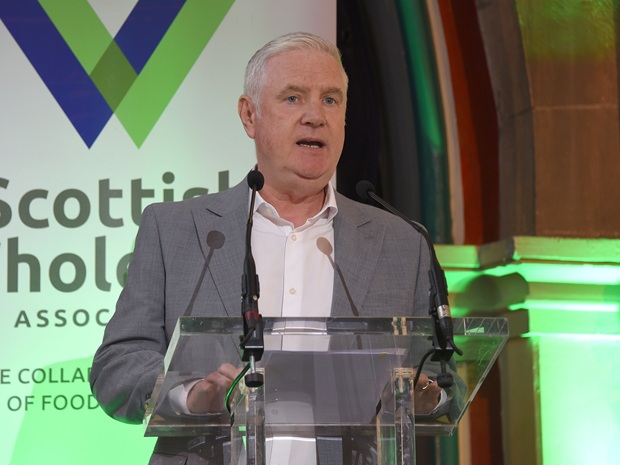 Strengthening member resilience, transforming sector capability and reflecting the strategic pillars of SWA – advocacy and engagement, training and development, sustainability, and data and communication – were discussed and explored by speakers and panels throughout the event at Òran Mór in Glasgow.
Tom Slaven, SWA president, welcomed attendees, thanked them for their support, and set the tone by highlighting how the association has adapted to a changing environment – emphasising that the wider industry must continue to do the same.
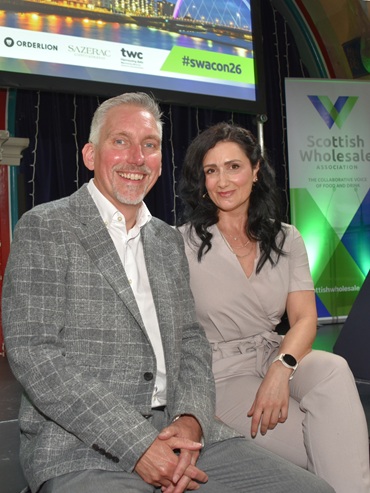 SWA chief executive Colin Smith explained how the pillars, based on engagement with members and forming part of the association’s three-year strategy. He said: “Supply, Sustain, Support – that’s the framework we’ve put in front of every political party and stakeholder, translating those pillars into a clear ask: secure the supply chain, sustain a skilled and resilient sector, and support the conditions for growth.”
In a presentation titled Building Wholesale Resilience – The Path to 2050, Tanya Pepin, co-founder and managing director of The Wholesale Company, focused on how the consumer environment has fundamentally changed, with supply chain disruption and unstable geopolitical conditions including global conflicts and climate change.
One of her overarching messages was that “demand is not disappearing, it is fragmenting and evolving”. Wholesale, she said, was also under pressure from rising energy bills and labour costs including increased employers’ National Insurance payments and wage inflation, while regulatory pressures came in the form of, for example, HFSS, EPR/DRS, MUP, tobacco legislation, and sustainability requirements.
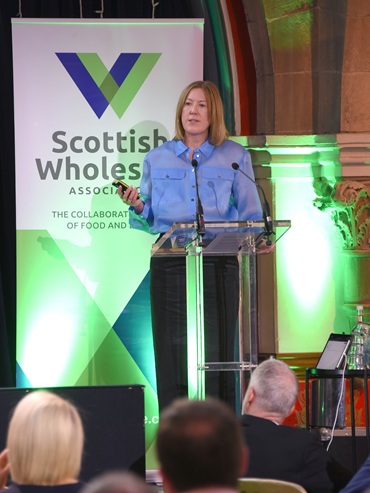 While hospitality spend continues to grow overall in Scotland faster than the rest of the UK, convenience stores – both independents and symbol groups – remain under pressure but are performing better than the rest of the UK. Much of this, Ms Pepin said, can be attributed to shifting consumer behaviour with shoppers seeking new experiences and innovation such as subscription food boxes and meal kits – and consumers becoming more digitally enabled.
Wholesalers, she added, were ideally placed to “become the discovery engine for the next generation of food and drink”.
Professor Colin Campbell, meanwhile, shone a spotlight on climate change in a session titled Planet & the Scottish Supply Chain in 2050: How climate change and global instability will impact food production, sourcing and logistics. The chief executive of the world-leading Scottish scientific research organisation the James Hutton Institute, explain why Scotland could play a vital role in sustainable food security and shared in-depth insight on the likely future impacts on food production and transportation.
Climate change, he pointed out, is the single greatest threat to supply chains and will require structural change – so how do businesses need to operate in this new environment? How will we secure a resilient supply chain? Wholesalers, Professor Campbell said, can be positive about the future and look for opportunities by assessing risks for key commodities.
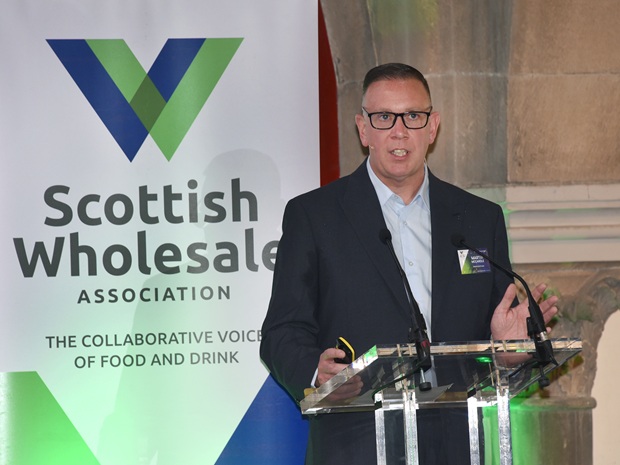 Other speakers included Martin McCardle, regional operations manager at Brakes Scotland – winner of the 2026 Achievers Great Place to Work award – who shared how practical changes have helped the wholesaler successfully recruit for hard-to-fill roles and improve retention in a presentation titled Building a Great Place to Work. He was joined by David Summerhill, lecturer in people and organisations (HRM) at Glasgow Caledonian University.
In conversation with broadcaster Zara Janjua, the conference host, Antony Begley, editor of Scottish Local Retailer, stood in for retailer Girish Jeeva, of Girishi’s Costcutter in Barmulloch, Glasgow, discussing the recent refurbishment of his shop to create a store that meets the changing demands of his customers and ensures he’s ready for the future.
Graham Urquhart, director of sales at the Scotsman Group, owner of Òran Mór, spoke about how the venue is adapting to changing customer and client demands, and works closely with local producers, and ways it has adapted to offer unique experiences.
A Building Wholesale Resilience panel discussion featured Jane Mackie, founder of Rora Dairy in Aberdeenshire, Jim Cummiskey, chief executive of Glasgow wholesaler Fáilte Group, Alice Graham, GB head of hospitality, wholesale and foodservice at Carlsberg Britvic, and David Cooke, chief operating officer at buying group Unitas Wholesale.
They discussed whether the sector could develop an incubator model across Scottish wholesale to support emerging categories, brands and local products. The aim would be to strengthen and futureproof the wholesale channel while bringing the entire supply chain together – boosting Scotland’s food security and unlocking the climate opportunities highlighted by Professor Campbell in his presentation.
Meanwhile, the SWA’s Jayne Swanson, head of public affairs, in conversation with the host, discussed how an evolving political landscape “creates a moment” for wholesale and why SWA member insight is the key to turning that moment into impact.
In a session titled Modern Marketing Magic: Simple Ways to Make Your Brand Stronger and More Successful in an Increasingly Complex Media Landscape, Ross Macdonald, head of strategy, and Alison Downs, head of consumer at communications agency Frame shared their take on the basics of branding and modern marketing, offering practical advice for the audience.
Finally, keynote speaker Felix Riley, an entrepreneur, financier and former comedy writer, who helps organisations and business leaders adopt “bigger thinking on their biggest challenges” and shows how ambition can turn into good outcomes, lived up to his promise that his presentation would “not be motivational fluff”.
Instead, the author and commentator inspired and challenged his audience to free themselves of limiting ways of thinking.
At the start of the conference, delegates were asked to identify the biggest threat to wholesale over the next 25 years from a range of factors including AI, competition, regulation, and climate change before being asked again at the close of the day to consider the sector’s greatest opportunity – ultimately concluding that generational shifts in consumer needs represent the channel’s most significant opportunity for the future.
Throughout the day, a Vendor Village exhibition featured producers, suppliers, and SWA service provider members. There were also compliance clinics on the UK deposit return scheme (DRS), packaging extended producer responsibility (EPR), employment rights, and diversity, equity and inclusion (DE&I) to offer hands-on support, expert advice, and facilitate new partnerships.
Comments are closed.