

The market for food supplement and nutrition products is projected to reach around $160 billion by 2029, expanding at a CAGR of 5.1%.
Driven by health-conscious consumers, the category is expanding thanks to changing expectations and new audiences.
This creates an opportunity for forward-looking food and beverage producers that adopt new ingredients and new ideas, writes Anna Larsson, Category Leader at Tetra Pak.
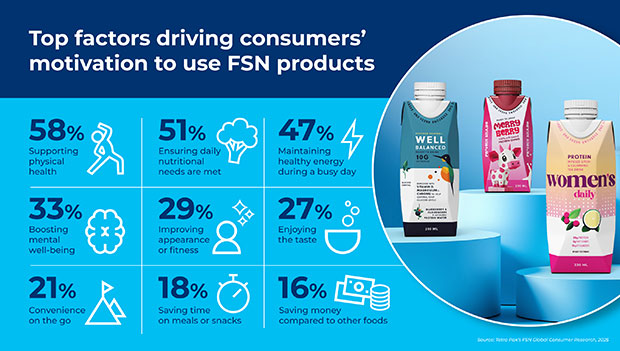
Recent research by Tetra Pak, conducted to help food producers navigate through recent consumer nutrition trends, found that health-conscious consumers purchase food supplement and nutrition products for a variety of reasons. These range from meeting daily nutrient needs to supporting immunity and digestive health. Mental and emotional wellbeing are also important, with one in three seeking products that help them feel more in control of their health or boost energy.
These drivers are shaping increasingly distinct purchasing behaviours within the food supplement and nutrition sector. To capitalise on the market’s continued growth in 2026, food and beverage producers will need to align their strategies with three emerging trends.
New audiences for health benefits
It isn’t just athletes and gymgoers looking for health benefits. Demographic shifts are playing an increasingly important role in shaping demand for food supplement and nutrition products. Younger adults tend to prioritise taste and enjoyment, while older consumers are more motivated by health-related concerns. As people age, health challenges often become more frequent, which can reduce our sense of control. In response, many look to regain that sense of control through products that promise support for overall wellbeing.
However, older consumers are typically more sceptical about the benefits these products claim. For brands, this highlights the importance of packaging that showcases transparent, authentic and educational communication.
Looking beyond protein
Protein remains a core part of the category, with products established in the mainstream from dairy items to meal replacement products. Indeed, the protein boom has helped build consumer awareness of functional ingredients more broadly. Plant-based protein sources like soy, have become staples in many products and households, with further headroom for new or emergent varieties like collagen and pea. Consumers today are educated and selective about types of protein targeting different health benefits, with variations such as quicker absorption by the body or a longer-term absorption rate. Beverage producers can answer this broadening interest by offering a range of ingredients beyond protein, in novel or function-specific formulations.
Alongside protein, fibre’s popularity is rising fast, often linked to digestion and satiety. With 27% of respondents regularly using protein and 15% using fibre, there is space to grow both protein and fibre-focused products.
Other emerging ingredients include Omega-3 fatty acids and conjugated linoleic acid (CLA). There is growing interest in biotics, which covers probiotics, prebiotics and postbiotics that can contribute to immune and digestive wellbeing.
When producers combine credible benefits with appealing sensory profiles, they will be in a strong position to lead a competitive market.
Global markets, local tastes
To succeed at scale, it’s crucial to understand regional preferences. Consumer preferences vary widely. Protein generally is popular in North America, while people in Brazil show a specific interest in collagen. Biotics are popular in China, and India shows a specific growing interest in botanical extracts, while Western Europe displays a broader mix of preferences.
Preferences for flavour also differ. Consumers in Japan favour coffee-led profiles, with those in India and Saudi Arabia preferring botanical or spicy notes. Europe varies by country, with examples including coconut in Italy and dessert-led flavours in Spain.
The same can be said for texture: Asian consumers often choose thicker, smoother textures, while Europeans lean toward more natural mouthfeel. Americans prefer sweeter, more indulgent options.
For producers, this variety highlights the need for regional formulation strategies supported by sensory expertise and localised R&D. Tailoring products to specific markets reduces development risk and improves consumer uptake.
Meeting the opportunity ahead
By understanding and acting on these trends, producers can expand into new consumer segments and unlock new revenue streams. This may involve creating tailored formulations for specific demographics or adapting flavours and textures to local markets. Consumers are increasingly willing to pay a premium for products they trust to support wellbeing, making clarity and innovation essential.
Breaking into this category can feel challenging, especially given the premium placed on product quality. By working in close partnership with food and beverage producers, Tetra Pak helps turn innovation into scalable, market-ready solutions, enabling brands to progress with confidence while unlocking opportunities across the next generation of nutrition.
Comments are closed.