

Increased workplace attendance has spiked on-the-go breakfast commuting and flattened the early-morning rush toward mid-morning.
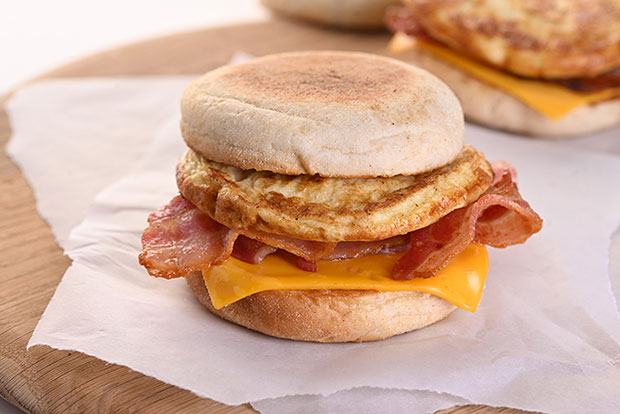
Consumers are “breakfasting smarter” by cutting back on ultra-processed options and seeking nutrient-dense, high-protein foods—fuelling a massive surge in egg and yoghurt consumption.
With broader dining-out budgets squeezed, consumers treat themselves to low-cost morning treats and bundled value deals.
Quick-service restaurants and cafes are benefiting as morning coffee and portable bakery items (like sourdough, muffins with reduced sugar, and protein-enriched pastries) anchor daily routines.
Josh Corrigan, Head of Sales, UK at St Pierre Groupe, highlights how changing consumer habits and versatile product formats are driving strong growth for the Baker Street brand, particularly across its market-leading rye portfolio. Flexible and hybrid working routines have created a broader spectrum of breakfast needs, ranging from a quick slice of toast to more substantial, sit-down meals. This shift underscores a growing demand for versatility in bakery products that seamlessly bridge breakfast, lunch, and snacking.
“Sliced bread remains central to breakfast because it is familiar, convenient and can work just as well for a quick slice of toast as it can for a more substantial topped breakfast,” explains Corrigan.
Baker Street is capitalising on these evolving routines through its health-led speciality breads. The brand holds a dominant position as the UK’s number one rye bread brand, capturing over a third of the market by value and driving more than half of the category’s overall year-on-year growth.
In the convenience channel, where the rye category is expanding by 17% in value and 12% in volume, Baker Street is outperforming the segment by delivering over three times the value growth and nearly five times the volume growth (Circana, 24/01/2026, last 52 weeks).
Key drivers include its Rye & Wheat and Seeded Rye loaves, as well as the new Baker Street Light Rye Bread, a 500g sourdough-starter loaf crafted with a softer texture and milder taste to recruit new shoppers to the category.
To maximise sales, Corrigan advises wholesalers to offer a balanced fixture pairing everyday staples with high-growth speciality lines, taking advantage of cross-category link-selling and extended shelf life to reduce waste.
“Products that offer clear nutritional benefits while continuing to deliver on taste, convenience and versatility are well placed to capitalise on this,” Corrigan notes.
Corrigan highlights how evolving morning habits and a growing demand for accessible indulgence are fuelling strong performance for the St Pierre brand across the wholesale and bakery sector.
Breakfast represents the largest subsector within bakery, accounting for 36 per cent of occasion spend and seeing a 3 per cent value growth (Circana YTD – Total Bakery YTD 13 June 2026).
As cost considerations prompt consumers to eat more at home, demand is surging for affordable, café-style experiences, driving growth in continental formats like croissants and brioche.
“Cost considerations mean more consumers are eating breakfast at home, but they still want products that make the occasion feel special,” notes Corrigan. Additionally, on-the-go and individually wrapped pastries remain pivotal for time-poor commuters.
St Pierre continues to outperform the market as the UK’s fastest-growing croissant brand and the number one savoury brioche brand (Circana | All Outlets | CONTINENTAL | 52 w/e 13 June 2026). More than one in five UK households now purchase the brand, with year-to-date growth expanding at over six times the rate of the total bakery occasions sector (NIQ | Total Market & Outlets | YTD – 32 w/e 08/08/2026).
Innovation is central to this trajectory; the recent launch of the hybrid Croissant Loaf into grocery and its upcoming wholesale rollout, alongside new six-packs of individually wrapped Chocolate & Hazelnut Filled Croissants, have helped drive 18 per cent year-to-date growth within the continental subsector (NIQ | Total Market & Outlets | YTD – 32 w/e 08/08/2026).
To maximise channel sales, Corrigan advises wholesalers to cater to both immediate and planned consumption missions. “Wholesalers should focus on creating a range that reflects the different ways consumers now approach breakfast,” says Corrigan, emphasising the importance of balancing everyday staples with portable food-to-go options and premium, innovative formats that encourage trade-up.
Stéphanie Brillouet, Marketing & Innovation Director at Délifrance, highlights how shifting consumer routines, nutritional awareness, and a desire for affordable indulgence are reshaping the morning bakery market.
As busy routines blur mealtimes, breakfast is expanding beyond early-morning hours. Only 34% of Brits purchase food before 9am, whereas 50% of café food purchases occur between 9 am and midday. While classics like croissants remain early favourites, demand is surging for versatile, portable formats. “Portable pastries, breakfast sandwiches and other easy-to-eat bakery formats can give consumers the freedom to choose when and where they eat,” Brillouet notes.
Simultaneously, consumers are balancing indulgence with nutritional value rather than cutting out treats altogether. Freshness leads health considerations for 52% of consumers, followed by fibre (39%), low fat (38%), and low calories (34%), alongside strong interest in protein (42%) and probiotics (48%).
Brillouet explains, “There is certainly a growing appetite for breakfast options that feel more wholesome and nutritionally balanced, but this shouldn’t be viewed as consumers turning their backs on indulgence altogether.”
Morning bakery also serves as an accessible luxury, with 56% of shoppers prioritising value, defined primarily through quality carriers, fresh ingredients, and premium fillings rather than low prices alone. Sandwiches are the top UK breakfast and brunch choice at 72%, closely followed by sweet (64%) and savoury (62%) bakery items.
Brillouet advises operators and wholesalers to focus on versatile base products, customisable formats, and seasonal lines to maximise sales. “The stronger opportunity is to create breakfast propositions where value, quality and indulgence work together – giving consumers a reason to trade up while still feeling they have made a sensible choice,” she emphasises.
Holly Holt, Brand Manager at Lantmännen Unibake UK, highlights how breakfast has evolved into a highly diverse, commercially vital occasion driven by shifting health priorities, convenience, and a desire for affordable quality.
With mainstream scrutiny of ultra-processed foods, health has emerged as a top sales driver, with Kantar data showing an additional 604 million breakfasts selected for health credentials. Consumers are moving toward clean-label options like sourdough, seeded, and rye loaves. Sourdough speciality loaves, in particular, have delivered 23.4% value growth (Circana, 52 w.e. 4th July 2026). “The crafted, rustic feel of sourdough, ciabatta and speciality breads – often with seed, dried fruit and grain inclusions – also helps to elevate the eating occasion, whilst the widely recognised health benefits provide a meaningful first meal,” says Holt.
Inclusion-led formats, such as cranberry and cashew or fig with black pepper, further signal quality and natural functionality. Simultaneously, a growing demographic of “Mindful Treaters,” including consumers using GLP-1 medication, is driving demand for portion-controlled indulgence. Mini Danish pastries, for instance, have achieved 9% value sales growth (Circana, 52 w/c ending 17/01/2026).
While speed and visual appeal remain crucial for time-poor commuters seeking grab-and-go options, perceived value-for-quality guides purchasing decisions over price alone. To maximise sales, Holt encourages wholesalers and retailers to leverage bundled promotions, such as coffee-and-pastry pairings. “Offering customers meaningful value through breakfast bundles encourages trade up from a coffee-only morning purchase, raising transaction value and driving trial of a wider variety of products across multiple categories,” Holt notes.
Liz Ashdown, Marketing Director at Tropicana Brand Group, highlights how shifting morning routines, a growing focus on functional health, and new innovation are transforming the chilled juice and smoothie category into a vital breakfast driver.
Breakfast has evolved from a sit-down meal into a flexible occasion that fits around busy schedules. “Breakfast has stopped being a fixed moment at the table and become something that consumers fit around their day. This is exactly the space juice and smoothies occupy – they’re inherently portable and they let shoppers get real nutritional value into a morning that doesn’t always have room for a bowl and spoon,” Ashdown explains.
Reflecting this trend, naked take-home smoothies over-index for breakfast consumption against the broader category (Worldpanel, March 2026), and Naked maintains its position as the UK’s number one on-the-go functional smoothie brand (Circana, Chilled Functional smoothies, Symbols & Independents, 52 w/e 27 June 2026).
Health remains a primary driver, with 29.2% of category servings selected specifically for health benefits (Kantar, IH/CO Usage Panel, Soft Drinks, 52 w/e 20 April 2025 vs April 2024). As one in four consumers actively limit processed foods (Euromonitor International’s Voice of the Consumer: Health and Nutrition Survey 2025), demand for functional ingredients like fibre and protein is surging—particularly as only 4% of the UK population currently meets the daily 30g fibre recommendation (The Food Foundation, 2026). Furthermore, the rise of GLP-1 weight loss treatments is driving demand for smaller, nutrient-dense portions. To capitalise on this, Tropicana expanded into functional drinks with Tropicana Hydrate+ and launched Naked Fibre Machine.
Tropicana is outperforming the market, delivering +6.9% volume growth in a market growing at +3% (Circana, all outlets, chilled juice and smoothies, YTD to 20 June 2026). To maximise channel sales, Ashdown encourages wholesalers to place functional drinks in grab-and-go chillers and stock both single-serve and take-home formats. “Functional benefits must be underpinned by great taste – that remains the ultimate driver for consumers, whatever the health claim on the pack,” Ashdown adds.
Lorraine Rothwell, Director of Brand Marketing at Weetabix, highlights how shifting consumer behaviours, purpose-driven marketing, and flavour-led innovation are driving growth across the cereal category.
Breakfast remains a critical daily event, expanding by 56 million occasions over the past year to reach 20.24 billion overall (Kantar Usage 52 w/e 23rd March 2025). Rather than relying purely on routine, brands must deliver health, enjoyment, and cultural relevance. “It’s no longer just about routine; it’s about health, enjoyment, and increasingly, cultural relevance,” Rothwell notes. To engage diverse demographics, Weetabix has launched purpose-led activations like the “Weetabix All-Stars” campaign alongside digital initiatives, such as its interactive Roblox partnership designed to promote healthy breakfast habits to younger audiences through play.
Innovation that balances nutrition with taste is performing strongly. The new Weetabix Crispy Minis Caramelised Biscuit variant surpassed £1 million in value, becoming the fastest-growing new cereal variant over the past year (Nielsen IQ data to 17.05.25). Rothwell explains, “Whilst there is a notable shift towards ‘healthy’ breakfasts, Caramelised Biscuit has been so successful because it delivers on flavour, yet is still HFSS compliant, high in fibre and made with wholegrain wheat.”
Core performance across the portfolio remains robust. Weetabix Original maintains its position as the UK’s number one branded cereal, with value up 4.7% and volume up 3.8% in convenience (Nielsen data 52w/e total convenience 30th November 24), alongside its first rise in household penetration since 2020. Simultaneously, the broader Weetabix Crispy Minis line has expanded into a £33 million brand (Nielsen 12 w/e 11 Nov 24), demonstrating strong demand for HFSS-compliant cereals that combine playful textures with solid nutritional credentials.
Grant Yates, Sales Director at Yoplait, highlights how surging consumer demand for protein, fortification, and functional health is reshaping the dairy aisle and driving growth across breakfast and snacking occasions. While traditional breakfast staples like bread, cereal, and juice experience declining household penetration (NIQ Panel On Demand Homescan Feb 2026), yoghurt household penetration has climbed past 96% (NIQ Panel On Demand Homescan 29.3.25). Shoppers are increasingly turning to protein-led, customisable options to build healthier morning routines.
“Across kids’ yoghurt, adult plain & functional yoghurts and dairy drinks, shoppers are increasingly looking for products that work harder for them, whether that’s supporting bone health with vitamin D to providing high-protein options that fit seamlessly into busy routines,” notes Yates.
This shift has propelled massive growth in adult speciality sectors — Greek yoghurt is surging at 47.9% and Skyr at 54.9%, forming a combined £29.7m market, while the broader Plain, Natural, and Greek category is growing at 22.2% year-on-year in total convenience (Nielsen NIQ Total Convenience, MAT, 21.02.26). Simultaneously, kids’ breakfast occasions are up 21% year-on-year (Kantar Occasions data to Jan 2026), creating critical demand for fortified solutions that combat nutritional shortfalls in calcium and vitamin D.
To capture these opportunities, Yates advises wholesalers to optimise dairy fixtures by balancing portable formats and family packs, merchandising by mission, and cross-merchandising yoghurts with fruit, granola, and cereals.
“For wholesalers, the opportunity lies in helping retailers range products that meet these evolving health and lifestyle needs while clearly signposting benefits in fixture,” Yates explains.
Luke Stowell, Managing Director at Natural Balance Foods (TREK and n?kd.), explains that busier morning routines and an escalating focus on health are driving massive growth across the £686m total retail cereal bar market (NIQ scantrack retail data to W/E 16.05.26).
As consumers increasingly scrutinise ingredient lists and ultra-processed foods (UPFs), demand is surging for convenient, natural, and nutrient-dense options. Better-for-You snack bars are growing at +12.2% (RMS data latest 52 weeks ending 13/06/2026), with protein and fibre emerging as dominant purchase drivers. “Protein is still one of the biggest draws for shoppers looking to fuel busy mornings, with 35% of UK consumers saying this is one of the most important attributes when choosing a cereal bar,” notes Stowell (Mintel Snack Bars & Breakfast Biscuits – UK – 2026). Simultaneously, consumer awareness around gut health has fueled interest in fibre, prompting n?kd.’s Fruit & Fibre bars to grow +21.7% year-on-year to £2.4m RSV (NIQ scantrack retail data to W/E 16.05.26).
Both brands are outperforming the market through a steadfast commitment to plant-based, wholefood ingredients. TREK has delivered exceptional growth of +21.8% in value and +18.8% in volume, reaching £46.8m (NIQ scantrack retail data to W/E 16.05.26). Meanwhile, n?kd. has grown +9.4% in value and +9.9% in volume (NIQ scantrack retail data to W/E 16.05.26), driven by simple, HFSS-compliant recipes made from fruit and nuts. “While many brands are scrambling to reformulate and rebrand as ‘natural’, n?kd.’s focus remains on simple, recognisable ingredients,” explains Stowell. “Our products have always been HFSS compliant, and as consumers become more aware of UPFs, n?kd. is well positioned as a snack that champions simplicity.”
The ready to drink coffee boom is showing no signs of slowing down. Its value has surged by 8.2% to £365.7M this year on volumes which is up more than 6.5% (NIQ). And as consumers look for convenient breakfast and morning options, RTD coffee is well placed to meet that demand.
Kate Abbotson – Senior External Communications Manager at Coca-Cola Europacific Partners, comments: “Consumers are increasingly looking for flavours that feel both new and familiar. They enjoy discovering something different, but they’re much more likely to try it when it’s inspired by flavours, brands or cultural moments they already recognise. That’s reflected in the fact that 44% of consumers say relevant cultural partnerships influence their purchasing decisions (Dazed Media), highlighting the role collaborations now play in driving trial.”
CCEP’s limited-edition Costa Coffee McVitie’s Jaffa Cakes Frappé, which launched in May this year, is a good example of that approach. It combines Costa’s signature Mocha Italia coffee blend with the familiar chocolate and orange notes associated with McVitie’s Jaffa Cakes, to deliver an immediately recognisable flavour combination, critically, that feels new in an RTD coffee context. It also brings together two much-loved brands, which can help create standout and encourage trial among shoppers who may not normally explore the RTD coffee fixture, including those looking for something different alongside breakfast or on the morning commute.
“We are also seeing strong interest in flavours inspired by coffee shop menus and desserts. Costa Coffee Creamy Tiramisu Frappé launching in March of last year, for example, draws on a familiar Italian dessert and offers a velvety, indulgent experience in a convenient 250ml can,” adds Abbotson.
“Younger consumers are playing a major role in these trends after adopting the category as a year-round, all-occasion beverage (Kantar) and are generally more open to experimentation and products that feel visually or culturally relevant. For retailers, flavour innovation therefore has a role not only in generating incremental sales but also in making the entire fixture feel more dynamic and easier to discover, particularly as shoppers look beyond traditional hot drinks for convenient breakfast and morning choices.”
Susan Nash, Trade Communications Manager at Mondel?z International, says consumer demand for convenient, healthier morning options combined with irresistible taste is driving strong growth across the breakfast and morning snacking categories.
Healthier biscuits have delivered +10.1% RSV growth year-on-year (NielsenIQ Retail Measurement | GB – MONDELEZ – OS RMS BISCUITS | 15.02.26), proving that busy consumers increasingly seek products that fit dynamic lifestyles without requiring compromises on enjoyment. Highlighting this trend, the limited-edition belVita Duo Crunch Choco Hazelnut pairs the nation’s top biscuit flavour—chocolate—with a source of fibre and five wholegrains.
Similarly, Cadbury Brunch Light has surged +35% in value and +40% in volume, offering non-HFSS choices with fewer than 100 calories per bar (NielsenIQ MAT Latest 52 Weeks – w/e 14/02/26). “The category has delivered +10.1% RSV growth versus last year, reflecting continued demand for options that can fit easily into increasingly busy lifestyles,” notes Nash.
Portability and value remain critical as time-poor shoppers navigate fast-paced morning routines. Products like belVita Soft Bakes and the Cadbury Brunch core range provide convenient, grab-and-go propositions. To address budget pressures, Mondel?z introduced a 10-bar value pack for Cadbury Brunch Choc Chip — the top product in healthier biscuits — catering to larger families and value-conscious shoppers.
Ultimately, Nash emphasises that taste and texture remain fundamental drivers alongside health credentials. “While shoppers are increasingly considering the credentials of their morning choices, taste and texture remain fundamental,” Nash explains, noting that retailers can maximise sales by offering a versatile mix of formats, price points, and recognised brands across the fixture.
Chris Owen, Brand Director of Breakfast at Premier Foods, highlights how evolving consumer routines, a demand for functional health, and the need for value are shaping the modern breakfast category.
With busy lifestyles redefining morning routines, out-of-home and on-the-go breakfasts have surged by 36 million occasions over the past five years (Worldpanel by Numerator, 52 w/e 19 Apr 26). While speed and convenience remain vital — with 70% of UK adults prioritising ease or speed when choosing breakfast (Mintel, December 2024) — Owen notes that taste remains paramount: “The brands best placed for growth are therefore those that combine convenience, nutrition and great taste.”
Premier Foods is capitalising on these shifts through high-protein, fibre-rich innovations under the FUEL10K and Ambrosia brands. FUEL10K Chocolate Chunks Granola stands as the UK’s number-one-selling granola SKU (Circana,52 WE 12 Sept 2026), and the brand has expanded with non-HFSS, protein-boosted variants, larger 650g value packs, and new chilled Yoghurt & Granola Pots. Meanwhile, Ambrosia Ready-to-Eat Porridge Pots continue to outperform the wider portable hot cereals category (Circana, 52 WE 12 Sept 2026). To help independent retailers navigate budget pressures, Premier Foods has also rolled out new price-marked packs (PMPs) across its ranges.
To maximise sales in the wholesale and convenience channel, Owen advises retailers and wholesalers to look beyond traditional fixtures. “Wholesalers should also help retailers think beyond the traditional cereal fixture. Breakfast drinks, porridge pots and chilled grab-and-go products can benefit from placement in high-traffic locations or alongside complementary morning products,” Owen explains, emphasising that clear signposting and prominent PMPs give shoppers confidence in value.
Oli Sampson, Managing Director of Central Foods — home to brands like The Great British Egg Co. — explores how shifting out-of-home dining trends, health-conscious habits, and operational efficiencies are shaping the breakfast and foodservice sectors.
With the UK eating-out market valued at over £95 billion, breakfast occasions continue to grow as consumers seek convenient meals away from home (Lumina Intelligence – UK Eating Out Market Report). Morning routines dictate the pace: busy weekdays drive demand for grab-and-go options like bacon and egg muffins, while weekends encourage leisurely buffet and brunch experiences. Furthermore, health considerations now influence 44% of venue choices (Lumina Intelligence – UK Eating Out Market Report), accelerated by the rise of GLP-1 weight-loss medication users, who now account for 9% of UK adults (PWC; KAM Insights). “Contemporary consumers are ‘breakfasting smarter,’ seeking options rich in protein and nutrients,” Sampson notes.
To help operators capitalise on these trends, Central Foods offers versatile, high-quality products like The Great British Egg Co. ready-baked omelettes, KaterVeg! vegan sausages, and KaterBake bakery lines. The company also recently introduced Happy Egg Co. School Omelettes to support the growing education catering sector, which saw English schools serve over 10 million free breakfasts in the first half of 2026 (Gov.UK Press Release).
To maximise sales and navigate challenges like labour shortages and supply chain disruptions, Sampson advises wholesalers to leverage frozen formats and efficient mixed-pallet consolidation models. “Wholesalers stocking versatile, nutritious options like ready-baked omelettes can help operators boost their grab-and-go and sit-down menu options,” Sampson highlights.
Andy Lewis, Marketing Controller at Sunmagic Juices, believes shifting morning routines, an increased focus on health, and the demand for portability are shaping the breakfast beverage market.
As time-poor consumers increasingly skip traditional sit-down meals, morning routines diverge between quick grab-and-go commutes and more indulgent dining experiences. To capture the former, Lewis emphasises the importance of offering versatile, nutrient-dense drinks that provide greater satiety than standard juices.
“On the drinks front, this means drinks that deliver more nutritional value than standard options. Smoothies are an excellent example, and are often more filling than simple juice,” Lewis notes. Sunmagic addresses this demand with 250ml screw-cap smoothies in Strawberry & Banana or Mango & Passionfruit, alongside 1L cartons that offer operators flexibility for at-home or in-venue portioning.
Simultaneously, the “breakfasting smarter” trend is driving consumers away from ultra-processed options toward natural, functional choices. Rather than diluted drinks or artificial sweeteners, shoppers are prioritising whole fruit juice and functional ingredients. This has fuelled growth in wellness shots, such as Sunmagic’s cold-pressed 60ml VP Shots. Available in Ginger, Turmeric, Jalapeño, and Hot Mango—which features 1 billion live cultures and a source of fibre—these shots are designed to lock in nutrients and flavour. “Customers can choose from four flavours: Ginger, Turmeric, Jalapeño, and Hot Mango,” explains Lewis, highlighting how these options tap into the rising demand for immunity, digestion, and daily wellness support.
Caroline Buggisch, Product Marketing Manager at RM Curtis, says health-conscious dining, functional ingredients, and affordable trade-ups are transforming the breakfast and foodservice sectors.
As consumers increasingly “breakfast smarter” by cutting back on ultra-processed foods, demand is surging for nutrient-dense, natural ingredients. This shift is amplified by the rise of GLP-1 weight-loss diets and a mainstream focus on functional nutrition.
“With the rise in GLP-1 diets, health-conscious dining and functional ingredients are becoming more mainstream than ever before, and this extends across breakfast menus,” Buggisch notes. Versatile superfoods like chia seeds—which provide a complete plant-based protein (approx. 16g per 100g) and serve as a vegan egg-white substitute—are becoming breakfast staples in smoothies, oatmeal, and yoghurts. Similarly, ingredients like poppy seeds and antioxidant-rich sunflower seeds allow operators to infuse functional health into both wholesome and indulgent morning dishes.
Concurrently, while consumers are dining out less frequently due to economic pressures, they are increasingly willing to trade up when they do. Operators can capture these higher-margin sales by offering affordable coffee-and-pastry deals or premiumising classic dishes with gourmet upgrades. “To incentivise smaller, more frequent spends, affordable deals like coffee-and-cake or breakfast meal deals are ideal,” Buggisch explains. By supplying high-quality dried fruits, nuts, and seeds in bulk formats — such as Curtis Catering’s 450g chia seed bags — R.M. Curtis enables wholesalers to help operators easily elevate their breakfast menus with premium textures and flavours.
Comments are closed.