

The UK Crisps, Snacks, and Nuts (CSN) sector— worth £5.4bn (NielsenIQ, 2026)—is growing due to shifting consumer lifestyles, increased demand for affordable treats, and strong performance in sharing formats. Larger sharing bags and multi-packs drive a significant portion of market growth as consumers spend more time entertaining and relaxing at home.
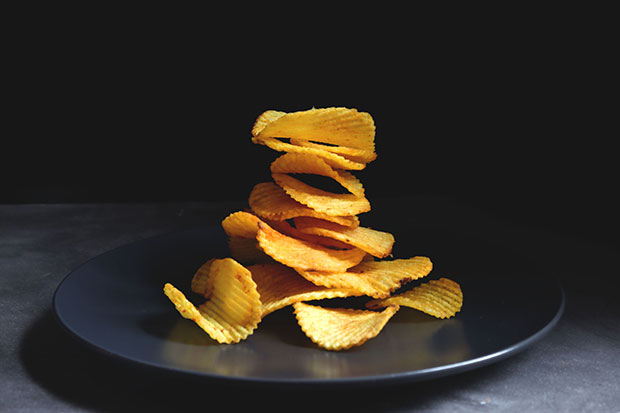
Despite cost-of-living pressures, shoppers view crisps and savoury snacks as an accessible, low-cost luxury or self-treat. Price-marked packs (PMPs) and value formats continue to perform well in convenience retail. Household penetration for hand-cooked and gourmet crisps is rising as consumers look for higher-quality ingredients and artisanal positioning.
Younger demographics and adventurous eaters are fuelling demand for unique taste profiles, crinkle-cut textures, and globally-inspired or street-food-flavoured snacks.
A rising segment of consumers seeks functional nutrition, higher protein content (such as protein crisps or low-carb options), or clean labels with short, recognisable ingredient lists—driven partly by growing awareness around ultra-processed foods (UPFs).
Strong availability across convenience stores, forecourts, and rapid online/delivery services keeps snacks visible and accessible for on-the-go or impulse purchasing.
Savoury snacking is a major revenue driver in Great Britain, with 99% of people consuming savoury snacks (Kantar Worldpanel, 2025) and 77% buying them from convenience stores (Kantar Worldpanel, 2025). Ed Merrett, Wholesale Controller at PepsiCo, explains how wholesalers can capture these impulse sales: “Through this, our aim is to help wholesalers unlock incremental sales through catering to retailers looking to stock up and target the at-home socialising occasion.”
Larger sharing formats are ideal for social gatherings, with core ranges like Doritos and premium Sensations Crisps encouraging shoppers to trade up and increase basket spend during Big Nights In.
Flavour is the single primary driver in snacking choices, influencing purchases on 50% of occasions (Kantar World Panel User Panel, 2025). PepsiCo continues to drive category engagement through flavour-led new product development (NPD).
Key launches include the limited-edition Doritos Golden Sriracha, aligned with growing consumer interest in sweet-and-spicy profiles (Mintel, Kantar Profiles, 2025).
Meanwhile, spicy options are surging among Gen Z shoppers seeking adventurous tastes (Worldpanel by Numerator, 2026).
The Flamin’ Hot line has proven exceptionally strong—Doritos Flamin’ Hot alone generated over £20m in sales between early 2024 and late 2025 (NielsenIQ RMS).
Recent innovations like Doritos Dinamita Extra Flamin’ Hot and Doritos Flamin’ Hot Nacho Cheese, following its success in the US market (Circana, 2026), offer accessible entry points for spice-curious consumers. To maximise category performance, Merrett emphasises balancing core staples with innovative launches: “NPD also has a really important role in driving interest and excitement within the category, but the key to success is supplementing this with a strong core that will drive repeat sales.”
Finally, Merrett advises wholesalers to organise depot layouts clearly around specific shopper missions: “Wholesalers should therefore block by key mission: for later (multipacks), for tonight (sharing), Singles and PMPs, so that retailers can easily locate the format in-depot.”
Using dedicated event displays and point-of-sale materials prior to major sporting occasions can further accelerate sales growth.
With one in five Brits (20%) now following high-protein diets (The Score), Doritos has expanded its range with the launch of Doritos Protein. Combining the bold flavour and crunch associated with Doritos, with 10g of protein per bag, the new range will be available in two flavours: Sweet Chilli Chipotle and Sizzling Steak.
Made from soya, lentils and corn, Doritos Protein is high in protein and fibre. The new chips are also popped and contain 30% less fat, giving retailers a new non-HFSS option for shoppers looking for high-protein snacks.
Protein is also moving beyond traditional fitness occasions, with almost half (49%) of UK consumers agreeing that high-protein foods will soon be found in every food category (The Score). Doritos Protein gives retailers a high-protein savoury snack in a large single-serve format, suited to food-to-go and daytime snacking occasions.
Both flavours have been developed around tastes that are already popular with younger consumers. Sweet Chilli Chipotle responds to growing interest in sweet and spicy flavours, with 45% of younger consumers saying they love ‘swicy’ flavours (Rubix Foods). Sizzling Steak reflects the role of meaty flavours in younger daytime snacking occasions, where they over-index (BOLT).
Doritos Protein are available in 48g single-serve bags at £2 RRP across grocery, impulse and wholesale channels.
Stuart Graham, Head of Convenience and Impulse at KP Snacks, highlights the strength and opportunity within the Crisps, Snacks and Nuts sector: “CSN is a dynamic, exciting and growing category, outpacing the growth of other impulse sectors. It represents a massive opportunity for retailers to grow sales and drive footfall by continuing to focus on key consumption and shopper trends.”
Growth is heavily underpinned by two core shopper missions: on-the-go snacking and at-home socialising.
Food-to-go missions now account for 16% of the top 10 convenience missions (Lumina Intelligence, 2021–2024), where Price-Marked Packs (PMPs) lead the way by signalling clear value to shoppers.
Conversely, at-home socialising drives the £2.1bn sharing segment (NielsenIQ, 2026), supported by top-performing brands like Butterkist, which holds a 30% market share in popcorn (NielsenIQ, 2026), and KP Nuts.
Taste remains the leading factor driving category purchases, with resurgence in demand for bold, spicy, and meaty profiles.
KP Snacks caters to these trends through focused new product development (NPD), including McCoy’s Coated Peanuts in £1.35 PMPs, alongside nostalgic re-introductions like Skips Salt & Vinegar and Discos Pickled Onion.
Explaining the broader market dynamics, Graham notes: “In Food to Go PMPs are leading the way as shoppers seek value and convenience. Meanwhile, with more people spending nights in, at-home snacking is booming, with sharing formats fuelling category expansion.”
To assist retailers in maximising sales, KP Snacks provides impartial fixture advice via its ’25 to Thrive’ recommendation, which focuses on top-performing SKUs. In trial runs with independent stores, implementing this strategy yielded an average 15.3% growth in bagged snack sales (Retail Trial, 2024).
Additionally, with 56% of crisps and snacks purchased from secondary locations in-store (Lumina CTP, 2024), utilising secondary displays, cross-merchandising, and mission-based blocking remains essential for capturing impulse purchases.
Rebecca Worthington, Salty Snacks Marketing Lead at Mars Snacking, says the Independent & Symbol channel faces a -1.3% decline in crisps and snacks (Circana, 2025).
Addressing this challenge, Worthington notes: “The antidote to shoppers seeking out the value they were once used to is innovation that represents something new and exciting.”
A key example is Cheez-It Snap’d, which generated £33m in value sales (NIQ, 2026) and became the UK’s largest new brand launch in 2024 (Kantar Worldpanel, 2024).
Supported by tailored formats, ranging from 40g single packs to 120g PMPs, the range recently won Product of the Year 2026 (Kantar Worldpanel, 2025).
Pringles also continues to anchor the category as the leading large sharing brand, valued at £45.1m (Circana, 2025).
To optimise sales without overwhelming shoppers, Worthington advises focusing on core bestsellers before introducing disruptive challenger brands: “In a channel where category sales are down by -1.3%, retailers must avoid offering overwhelming variety and instead focus on products that are guaranteed to meet key shopper missions and ultimately drive sales.”
Additionally, cross-merchandising across the store, such as placing single bags near meal deals or sharing formats near take-home products, helps build basket value. Seasonal activations and collaborative NPDs, such as the Pringles x Burger King range, further drive impulse purchases.
Worthington encourages independent retailers to focus on established suppliers: “The most sustainable strategy for 2026 is to prioritise innovation from category leaders. Typically, they can be found in trade media or displayed at trade shows, indicating the brand is ‘putting money where its mouth is’ and investing in stores like yours.”
Leveraging supplier category tools like Stock Cheez-It and Kellogg’s Vantage ensures retailers stay informed on trends and optimal range execution.
The Crisps, Snacks and Nuts category is undergoing a noticeable shift toward high-intensity formats and adventurous flavour profiles.
Sharing bags now represent 41% of market value — growing by 6% YOY and adding over £111m in value sales — while grab bags hold a 21% share (+2.3% YOY) (NIQ, 2026).
In contrast, traditional potato crisps have seen unit sales drop by 31.1m packs, whereas tortilla chips are driving growth, adding 21.2m packs (NIQ, 2026). Hot and spicy flavours are leading this expansion, adding +8.8m packs over the last year (NIQ, 2026).
Marta Valles Sanchez, Marketing Director at Takis Europe, highlights the demographic shift driving these changes across impulse and wholesale channels: “Wholesalers are at the heart of the changes described above, with impulse channels leading the charge from traditional to new and exciting. Younger shoppers are at the heart of this change and their engagement with convenience stores is meaning new trends are emerging first in impulse and, by implication, wholesale.”
Outpacing all other top 30 brands in the CSN category, Takis has generated £10.7m in sales and accounted for over 27% of overall branded growth in the past year (NIQ, 2026).
Within tortilla chips, Takis contributed 45.3% of the sector’s total value sales growth (NIQ, 2026).
Best-sellers include Blue Heat, Fuego, and Kaboom, supported by new NPDs such as Smokin’ BBQ, the seasonal Takis Zombie, and new 55g non-PMP formats targeting meal deal and vending channels.
Advising trade partners on how to capture emerging demand, Valles Sanchez emphasises a consumer-centric approach: “Listen to your shoppers! They’re looking for excitement and innovation, and they don’t simply buy new products – they explore them, discuss them, share them and discover them.”
To support wholesale sales, Takis backs its range with an integrated “Heat-O-Meter” campaign, seasonal activations, depots visits, and freestanding display units (FSDUs) to encourage impulse buys.
Snacking habits in the UK are evolving as consumers look beyond pure indulgence toward functional benefits like higher protein, lower sugar, and longer-lasting satiety.
As Shaun Whelan, Head of Convenience at Link Snacks, explains: “Snacking has fundamentally shifted from pure indulgence to a balance of enjoyment and function. Shoppers still want affordable, enjoyable treats, but they are increasingly looking for snacks that work harder for them.”
While the UK jerky and biltong category is experiencing strong growth, household penetration remains under 7%, indicating significant untapped headroom across the market.
Protein-rich meat snacks meet modern, flexible routines, appealing to busy consumers looking for quick, filling, on-the-go options or alternative treats at home.
Furthermore, bold flavour profiles such as Sweet & Hot and Teriyaki are performing exceptionally well, particularly among younger demographics seeking “safe adventure” in their snacking choices.
Jack Link’s Beef Jerky Original 25g continues to lead as the highest unit rate of sale SKU in the category.
To further accelerate trial and draw fresh consumers — specifically Gen Z and Gen Alpha — into the category, Jack Link’s has launched a major partnership with MrBeast, featuring co-branded packaging backed by a 360° omnichannel marketing campaign throughout 2026.
To optimise category performance, Whelan advises retailers to integrate meat snacks into mainstream fixtures rather than treating them as niche items: “Retailers should think of meat snacks as a credible alternative within the wider savoury snacks fixture, not as a niche add-on. The key is to make the category easy to find, easy to understand and easy to buy.”
Whelan emphasises that visibility is paramount, recommending secondary placements, clip strips, and cross-merchandising alongside complementary categories: “Secondary siting can also be highly effective, particularly alongside sports drinks, energy drinks and food-to-go.”
The UK crisps, snacks, and nuts category grew 2.5% in value in mid-2026, primarily driven by sharing bags (Nielsen & Lumina, 2026).
Hand-cooked crisps now reach 58.5% of households — up 3.4 percentage points year-on-year (Kantar, 2026) — with 55% of buyers agreeing premium options are worth paying extra for (Mintel, 2025). Furthermore, 63% of Western European consumers associate premium quality with high-quality ingredients (NielsenIQ, 2026).
Tom Carne, Director at Canny Snacks (operator of Burts Snacks), emphasises how premium hand-cooked products meet evolving consumer expectations: “Every Burts crisp is hand-cooked in small batches in Devon, and carries the Red Tractor stamp. That gives wholesalers a premium line with a clear trade-up story for their retail customers, and a provenance message their foodservice customers can put on their own menus.”
Snacking is increasingly replacing full meals, with 45% of UK consumers — and 62% of 16-to-34-year-olds — snacking instead of eating a traditional meal at least once a week (Mintel, 2026).
Single-serve 40g bags represent roughly three-quarters of Burts’ wholesale sales (Canny Snacks, 2024–2026), driven largely by food-to-go meal deals.
Bestsellers Lightly Sea Salted, Sea Salt & Malt Vinegar, and Mature Cheddar & Onion generate over 70% of Burts’ wholesale crisp revenue (Canny Snacks, 2025–2026).
To maximise commercial opportunities, Carne advises wholesalers to balance stock availability with strategic ranging: “Get the core right first. A tight range of best-selling flavours in each format does most of the work, and availability matters more than breadth.”
He also highlights the emerging “Golden Hour” consumption trend, encouraging cross-category merchandising: “Snacks are at the heart of making those everyday moments feel a little more special, so wholesalers should see the category as more than an impulse buy and range for the occasions their customers are serving.”
Andy Brown, Director, Envis Snacks, comments: “For us sharing bags are the best sellers and we are pleased to be able to offer smaller sharing bags for 2/3 people and also a wide selection of larger sharing bags for 4+ people in our Crunchips X-cut range so that retailers have a good selection of choice for their wide customer base and they are available in a range of mouthwatering flavours like Paprika, Chilli & Lime and Sour Cream.
“Different and hot flavours are very much at the forefront of our product range with lines like WOW Jalapeno, X-cut Chakalaka and X-cut Keba being flavours in good growth to satisfy the varying needs of consumers.”
Lorenz Mini Crackers launched earlier this year and are achieving the aim of providing the perfect combination of delicate crispy cracker texture and intense flavours to generate some real excitement in the baked snack category and are available in Salted, Bacon and C&O big value 100g bags with £1.25 RSP.
“As always, the two main areas for succeeding in the run up to Christmas are focusing on the right range including the core best sellers, new lines and products that offer differentiation and making sure they are always available by good stock rotation and positioning,” adds Brown.
Sharing formats and premium offerings continue to drive growth in savoury snacking as consumers look for affordable indulgences.
Tash Jones, Commercial Director at Fairfields Farm, highlights how large formats fit modern social occasions: “Sharing bags continue to perform strongly, driven by their appeal in group settings and social occasions. They offer an affordable and convenient way for consumers to enjoy a shared treat at home, particularly as consumers look for alternatives to more expensive nights out.”
Fairfields Farm’s 150g sharing bags — led by top-selling core flavours Cheese & Onion and Lightly Sea Salted — remain central to this trend.
The entire range is vegan and gluten-free, catering to diverse dietary needs. Shoppers are increasingly seeking out hand-cooked, premium crisps with authentic provenance.
Managing household budgets has not eliminated small treats; rather, consumers view premium snacks as an accessible trade-up.
Jones notes that storytelling and sustainability are critical differentiators: “A strong product story can create a greater sense of connection, authenticity and trust, helping consumers understand where products come from, what makes them different and why they are worth paying a premium for.”
Fairfields Farm reinforces its quality credentials through a 20-year, four-generation family farm heritage, on-site renewable energy, and an ambition to achieve on-farm net zero by 2033.
Consumer demand for adventurous global flavours and “treat culture” inspired the brand’s 2026 summer limited edition, Cajun Barbecue, as well as the return of its festive Honey Roasted Chestnut & Sage sharing bag for Christmas 2026.
Flavour NPD is driven directly by consumers via the “Secret Crisp Committee,” a public initiative helping shape upcoming launches.
Furthermore, a charity partnership with Air Ambulances UK raised £12,667.20 through sales of Lightly Sea Salted packs.
To maximise sales, Jones advises wholesalers to look beyond price alone: “Provenance, quality, sustainability and dietary credentials can all help products stand out in a competitive category and give customers a reason to choose one brand over another.”
Emerging snack innovation is increasingly driven by texture, novel formats, and social media discovery rather than flavour alone.
Brands managed by Langtins — such as Noomz freeze-dried confectionery, Coneys mini waffle cones, and Royal Family Mochi — highlight how sensory transformation and familiar concepts in unexpected formats resonate strongly with modern consumers.
Social commerce plays a central role in driving trial and sales, with Noomz and Coneys selling thousands of bags via TikTok Shop and generating approximately 4 million video views over a three-month period. A Langtins spokesperson emphasises that novelty must build upon familiar entry points: “The sweet spot is often familiar enough to understand immediately, but different enough to make somebody pick it up.”
To capture social media interest and lower the barrier to trial for unfamiliar formats, bundle options perform exceptionally well, with the Noomz four-pack bundle and Coneys mixed-flavour bundle outperforming single SKUs on TikTok Shop.
Meanwhile, Royal Family Mochi has expanded into mainstream value retail, reaching stockist coverage across 800 B&M stores nationwide.
Addressing category expansion, the spokesperson notes that innovation should complement rather than replace core staples: “Our biggest piece of advice is don’t confuse innovation with replacing the core range. Retailers should therefore think about their snack fixture as having two jobs: replenishment and discovery.”
To unlock mainstream supermarket channels across the UK and Europe, Noomz is introducing new 30g, 50g, and 55g pack architectures, alongside new flavour launches for Coneys including Orange and Peanut Butter.
Advising wholesalers on fixture strategy, the spokesperson underscores the importance of visual discovery at depots: “Visibility is essential for products that consumers may not yet know by name. Wholesalers need to trigger discovery at fixture.”
Snacking is increasingly playing a central role in at-home socialising, with hosts turning to trusted, premium brands to elevate gatherings and “picky bits” occasions.
Enjoyed in over 2.7 million UK households, the Biscoff 16x2pk Snackpack caters directly to group moments (NIQ, 2026).
Jo Agnew, Marketing Director at Biscoff UK, highlights the appeal of branded, pre-portioned formats during social events: “Not only does this ensure friends and family are well and truly satisfied with the snacks on offer, but it also helps snacks become a key talking point, encouraging friends and family to bond over their favourite treats.”
Beyond social gatherings, Agnew notes that consumer preferences are shifting toward sensory, experience-led snacking, with texture emerging as a primary focus.
Products that deliver distinct mouthfeels — such as the signature crunch of Biscoff biscuits or the dual texture of Biscoff Sandwich Biscuits — help satisfy this demand:
“As a result, wholesalers need to consider more than just taste when selecting their range of snacks as customers want products that look delicious, smell amazing and have a distinct texture to satisfy their sense of feel and sound,” adds Agnew.
Brand performance continues to expand, with Biscoff attracting 11% more buyers over the past year to reach 6.6 million UK households (NIQ, 2026).
The original 250g pack remains a core bestseller, recording over 7 million packs sold in the last year, while total Biscoff sales exceeded 23 million units across GB total coverage (NIQ, 2026).
Seasonal NPD includes festive-shaped biscuits in Reindeer, Snowmen, and Santa designs, backed by point-of-sale displays to drive seasonal impulse purchases.
To help retailers maximise sales, Agnew advises stocking instantly recognisable brands: “When buying snacks, many customers make decisions quickly and retailers need products that stand out on shelves to encourage these impulse purchases.”
The savoury snacking landscape is diversifying beyond traditional potato crisps through alternative ingredients, bold flavour trends, and social-media-driven discovery.
Annalisa Del Carro, Comms & Marketing Manager at Whatever Brands Ltd, highlights how plant-based alternatives like lentil and pea snacks offer retailers an accessible way to refresh their mainstream fixtures: “There’s more than one way to create a snack that feels special. Our ranges focus on different ingredients, distinctive flavours and texture. Van Holten’s puffed snacks are made with lentils and peas and baked rather than fried.”
Alternative formats under Human Nature include Lentil Sticks and Pea Rings, with Caramelised Onion winning Best Vegetable Crisp and Smoky Barbecue named Healthiest Crisp in the 2026 UK Independent Crisp Tasting.
Meanwhile, tangy pickle profiles are surging in popularity, featured across Van Holten’s puffed options such as Big Papa Pickle & Dill, Hot Mama, and Garlic Joe.
Upcoming NPDs will expand the range into Cheese Pickle, Ranch & Dill, and Ghost Pepper Pickle.
Social discovery continues to reshape shopper habits. Influencer marketing, creator taste reactions, and sampling are central to driving consumer trial and retailer confidence.
“Social media is changing how people discover snacks. A creator’s taste reaction can introduce a product to shoppers who might otherwise walk past it,” adds Del Carro.
To help wholesalers capitalise on these emerging trends without cluttering shelves, Del Carro advises balancing core range stability with novel offerings: “Keep the everyday favourites but leave some space for discovery. A few well-chosen additions can refresh a fixture without making it crowded or difficult to shop.”
Del Carro underscores that clear case sizing, competitive pricing, in-depot sampling, and working through distribution partners (such as Pulse SD Ltd., CLF, and Epicurium) remain essential to turning online interest into physical sales across convenience and independent retail.
Comments are closed.