

Parfetts has announced that, from January, it will rename itself Go Local Wholesale as the employee-owned wholesaler looks to bring the business closer to its retail customers and push towards £1bn in turnover.
The transition marks a new chapter for the business, making it more aligned with what it represents today and the customers it serves.
The change brings the wholesaler under the same name as its Go Local symbol estate, which includes Go Local Extra, Go Local, The Local and Shop & Go. The business said the new identity better reflected its growth from a regional cash-and-carry operator to a national wholesaler and symbol operator.
The move comes as the wholesaler targets £1bn turnover within two years and sets its sights on growing its symbol estate from more than 2,000 stores to 3,000 in the same period. It currently operates nine depots, with a further 500 symbol stores in its pipeline.
As the UK’s only employee-owned food and drink wholesaler, Parfetts recorded turnover of £807m in its latest financial year, up 10.6% year-on-year. Following the strong performance, the employee-owned business will share a 10% bonus with all staff.
The name change is intended to underline that closer relationship with retailers, with the Go Local name already established across the wholesaler’s symbol estate.
The business has stepped up investment to support its national growth plans. Its 113,000 sq ft Southampton depot, the company’s first in southern England, created more than 100 jobs and extended its distribution reach across the South and into London. More than half of orders are now placed online, following a significant expansion of the company’s digital platforms.
The name change also puts greater emphasis on Parfetts’ employee-owned structure. Every employee holds a share in the business, with profits shared with staff through its annual bonus scheme. The company said employee ownership allowed it to reinvest in its people, customers and long-term growth rather than paying dividends to external shareholders.
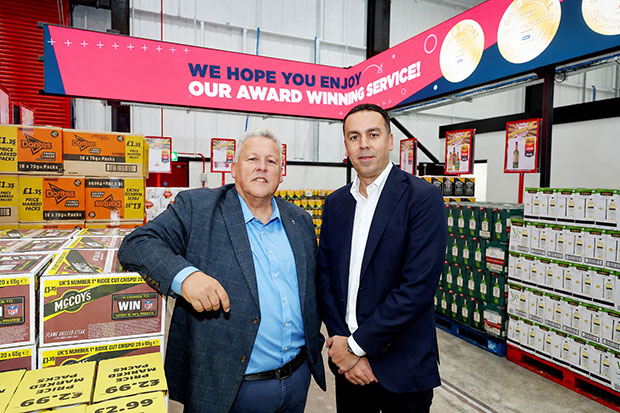
Parfetts joint MDs Noel Robinson and Guy Swindell tell Wholesale Manager what prompted the name change and about the company’s future plans.
Parfetts is changing its name to Go Local Wholesale. What prompted the name change?
GS: We’re proud of our history, but we feel that the new name better reflects who we are today. There are two major factors driving this business forward: the Go Local symbol estate and our employee-owned model. In terms of what our colleagues do, that bit of magic sets us apart from our competitors. You could argue that when the business went fully employee-owned in 2018, maybe that would have been the time to change, so it’s probably a little bit overdue.
We think the name really reflects who we are. It removes any confusion from being family-owned. It’s quite clear, and you’ll see it on the logo, the employee-owned message gets equal billing. It’s very clear on the new logo. It’s what our customers know us as, it’s what our suppliers want to talk to us most about in terms of Go Local. We have just surpassed 2,000 symbol stores across the UK. We are very much a symbol operator. We have still got cash & carry, and we’ll continue to invest and champion the cash & carry. But the Go Local estate is what’s really driving our growth.
So the Parfett family are not involved in the business at all now?
NR: No, they haven’t been since 2018. While we have got huge respect for them and they played a massive part in the history of the business and the wider industry, it’s now employee-owned and has been since 2018. We just think it’s now the time to move to a new position in terms of the new brand and the new logo. When you see the new logo, you’ll see our two real key strengths are the Go Local brand and everything that means, and the employee ownership of the business. When you put them together, it’s in a modern way, you’ll see it’s very exciting, very fresh, and we think it describes who we are today, not who we were previously.
We have heard before that the target is a billion pound turnover within two years. Are you on track to hit that target?
NR: Well, I think at the end of this financial year, I think we’ll just be under the £900m. So we are right bang on track, if not slightly ahead, I’d say.
At the end of the following financial year, we’re hoping to achieve that milestone, but it’s only a stepping stone to go on. We’re not going to stop there, obviously.
Are all the staff getting a 10% bonus?
NR: Yes, they got a sales bonus in July that was 4% and then there was a 10% bonus paid in October. And the interesting thing about that, because of the ownership model, £3,600 of that is tax free. So most of our colleagues get that bonus tax-free, which is another huge benefit of being employee-owned.
Of course, not everybody gets the same amount. It all depends on your position, we get a percentage of the salary.
You have nine depots currently. Are there any plans for a 10th?
NR: There isn’t currently, but we have expanded into Scotland, Wales, the South Coast and London.
Now we are just seeing which areas do best, it’s like a race to the finish line, and then we will decide in 18 months or two years where to place the next depot.
There’s no current plan, we’re not having discussions to build one or hire one or anything like that.
Are your Scottish customers served by a depot in Scotland?
NR: No, they are served by our Middlesbrough depot. We have done a lot of work on logistics and efficiencies, which has allowed this move. We’ve got stores in Glasgow and customers as far as Dundee.
There is still huge potential for expansion in Scotland and all over the country, we’ve only just started.
GS: If you were to see the map that I will be presenting, you’ll see what would be described as historical heartlands, areas that are very densely populated with symbol stores. What you’ll see though is where we’re now going into new areas, you start to see a build-up of stores, there’s a lot more opportunity in those areas. We’ve been very well received in the past couple of years in these areas, and we’re seeing rapid recruitment and rapid growth. So that gives us the confidence that we’re going to surpass the 3,000 store mark pretty quickly because we’re continuing to invest in the retail team to aid the recruitment and the stores. There has been a lot of investment into stores and in terms of the services we offer around digital. It’s an exciting time for the business, with such large territories for us to go after.
Do the Go Local retailers come to you from other symbol groups?
GS: They join us from everywhere. We’ve obviously had people join us from what you would describe as competitors. Importantly, when they do come across to us, there is a tonne of investment into the stores, we’re improving the store standards, promotions, working with a retailer, all to drive incremental business to that store, and increasing the footfall.
We are aiming to grow the market share and drive incremental business. But what’s really exciting in the past 12 months is just how many new shops we’ve acquired. These weren’t previously convenience stores at all. In the last financial year we had 82 non-shops that became convenience stores with us. These are places that were pubs, restaurants, travel agents, or new builds, anything that a retailer has got their hands on. That’s brand new business, a huge opportunity for us. It’s a real mixed bag.
Is every Go Local retailer assigned a rep?
GS: Yes, that’s correct. We have 75 guys out on the road. It is a big commitment from us, a big investment. But our model, being employee-owned, facilitates these levels of investments. We really value the relationship, working with the retailers, visiting the stores often weekly to build up that rapport and help.
Every single store has a point of contact, one of our retail development advisors, on top of everyone else, whether it’s your GM in depot or even myself or Noel, retailers can contact us.
How often do they get a visit?
NR: Dependent on the journey, it’s every week at the start of our commitment with us. After that, it would be at least once a month.
What is the target for the number of Go Local stores?
NR: The target is 3,000 in the next two years.
Do you have other fascia brands apart from Go Local?
GS: Yes, we have Go Local Extra and Go Local, which is your traditional convenience store offering, larger or mid-sized. Then we have the off-licence specialist brand, The Local. We also have Shop & Go, which is for your forecourts or transient sites. It could well be for a shop that’s near a busy bus depot, for the time-sensitive shopper. Then we have Local 4U, which is the first entry, academy kind of stores.
How is The Local doing?
GS: It’s got its space within the brands, it’s never going to be at the level of Go Local in terms of numbers. But we’ve got nearly 50 stores and we’ve got some really fantastic retailers on there. There is one in Carlisle that has just moved over to us. We have really enjoyed working with those retailers on this different model.
Is there anything more to add about the name change or any future plans?
NR: It’s been received really well by employees. Everyone we’ve talked to went through a big consultation before we made this change.
Comments are closed.