

Sustainability has been on the grocery agenda for years, what has changed is the context in which it now sits.
For brands, sustainability is no longer a standalone objective driven by consumer perception or corporate responsibility. It is increasingly shaped by regulation, cost pressure and operational reality.
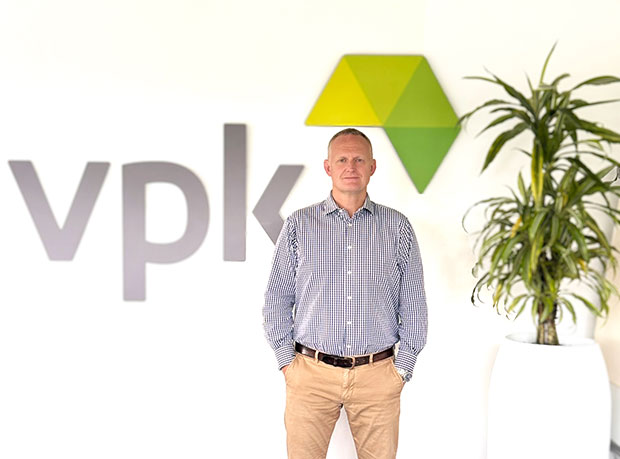
The introduction of Extended Producer Responsibility (EPR) is accelerating that shift, forcing businesses to look at packaging not just in terms of recyclability, but in terms of weight, format and overall efficiency, writes Adam Platts, Sales & Marketing Director, VPK Packaging UK & Ireland.
In short, sustainability decisions are now commercial decisions.
That creates a new challenge. Packaging must meet environmental expectations, comply with regulation and remain cost-effective, while still performing on shelf and across increasingly complex supply chains. The brands that succeed will be those that treat packaging not as a single decision, but as a system.
The new sustainability equation
EPR is changing how packaging is evaluated. While recyclability remains critical, the focus is expanding to include material usage, pack size and the removal of unnecessary space within packaging formats. This reflects how costs will increasingly be applied. Packaging that is heavier, more complex or inefficient will carry a greater financial burden.
As a result, brands are moving towards simpler, more efficient formats that use materials intelligently and perform well within existing recycling systems.
Fibre-based corrugated packaging is benefiting from this shift. In Europe, paper and board packaging achieves recycling rates above 80%, among the highest of any packaging material, supported by established collection and processing infrastructure. This makes it a practical option for brands looking to improve recyclability without introducing new complexity into their supply chains. However, sustainability cannot be reduced to material selection alone.
A recyclable pack that performs poorly in distribution or creates inefficiencies in-store is not sustainable in practice.
Designing out waste and inefficiency
One of the most immediate opportunities for brands is to address inefficiency within existing packaging formats. This includes reducing ullage, right-sizing packs and optimising structural design to improve pallet and transport efficiency. Small design changes, repeated at scale, can deliver significant reductions in both cost and environmental impact.
For example, improving pallet fill and reducing wasted space can lower transport emissions and reduce the number of vehicle movements required across the supply chain. In a grocery environment where margins are tight and volumes are high, these efficiencies matter. Crucially, these improvements do not require radical material innovation. They are driven by better design and a more structured approach to packaging development.
Sustainability still sells
While regulatory and operational pressures are increasing, one factor remains unchanged: packaging must still perform at shelf. Grocery retail is a highly competitive environment where visibility and presentation influence purchasing decisions. Research from Tesco Media highlights that only 24% of grocery purchases are fully habitual, while the majority of decisions are still made in-store. This reinforces the importance of packaging in guiding shopper behaviour.
Shelf-ready packaging (SRP) plays a key role here.
Well-designed SRP improves brand blocking, product visibility and shopper navigation, helping consumers find products quickly and make decisions with confidence. It also supports faster replenishment and more consistent presentation across stores. Sustainability cannot come at the expense of these outcomes. Packaging that reduces material usage but compromises shelf presence or product protection risks undermining both sales performance and brand perception.
The challenge, therefore, is not to choose between sustainability and performance, but to design packaging that delivers both.
A system, not a single decision
The most effective packaging strategies are those that consider the full journey, from production and packing lines through to distribution, retail and the end consumer. Decisions made at the design stage influence everything that follows. A pack that is not optimised structurally can create inefficiencies in warehousing, transport and in-store handling.
Conversely, a well-designed pack can reduce friction at every stage of the supply chain.
This is where collaboration becomes critical. Packaging must be developed in close alignment with how products are manufactured, handled and sold. Testing, validation and ongoing refinement are essential to ensure that solutions continue to perform as conditions change. Increasingly, digital tools are supporting this process. Advances in modelling and simulation allow packaging to be tested for pallet configuration, material usage and structural performance before production begins. This enables more informed decisions and reduces the risk of inefficiency downstream.
The direction of travel
Regulation will continue to tighten as EPR sharpens the financial impact of packaging decisions, while frameworks such as the EU’s Packaging and Packaging Waste Regulation (PPWR) will push further towards standardisation and recyclability.
At the same time, economic pressure will remain a defining factor. According to McKinsey, European grocery volumes grew by just 0.2% in 2024, while retailers continue to face margin pressure driven by labour costs, sustainability requirements and supply chain volatility.
In this environment, packaging must work harder.
Brands will increasingly prioritise solutions that combine material simplicity, operational efficiency and strong on-shelf performance. Fibre-based packaging, supported by established recycling systems and adaptable structural design, is well positioned to play a central role in that transition.
Sustainability in packaging is no longer about meeting a single objective. It is about balancing multiple demands e.g., compliance, cost, efficiency and performance. The most successful approaches will be those that recognise packaging as part of a wider system, not an isolated component. For grocery brands, the opportunity is clear. By treating packaging as a strategic tool, rather than a cost centre, it is possible to reduce environmental impact while improving supply chain performance and strengthening presence at shelf.
In that context, the question is no longer whether packaging is sustainable. It is whether it works.
Comments are closed.