

New research from cobolt studio reveals how UK consumers are fundamentally reshaping their relationship with food as convenience, cost, and health become increasingly intertwined in everyday purchasing decisions. The studio’s latest whitepaper, ‘Fast, Fresh, or Frugal? Understanding the Three Forces Reshaping the UK FMCG Food Market in 2026’, analyses online consumer conversations across the UK FMCG food sector from February 2025 to January 2026. Using the market leading consumer intelligence platform Brandwatch, the findings suggest that food brands can no longer rely on a single purchase driver, with consumers instead balancing multiple priorities simultaneously and making different trade-offs depending on the occasion.
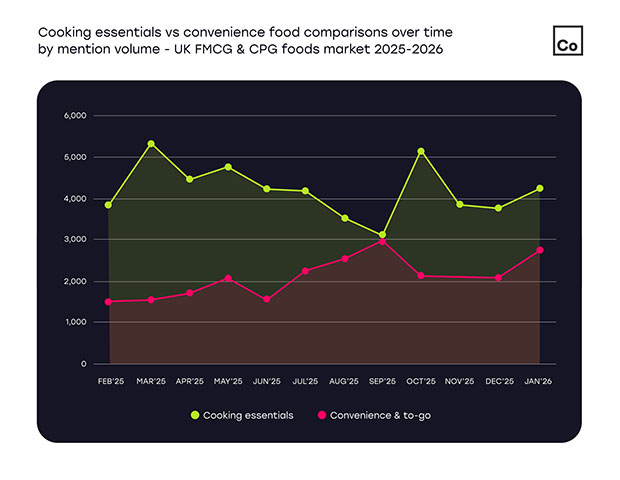 The research highlights a market defined by tension. Consumers want food that fits around busy lifestyles, but they are becoming more conscious of health, ingredients, and food processing. At the same time, ongoing economic pressures mean affordability remains a major consideration, even as shoppers increasingly seek quality and value rather than simply the lowest price.
Cost-related conversations generated approximately 156,000 mentions during the study period, making affordability a dominant force on food purchasing decisions. However, the research found that consumers are not simply trading down. Instead, many are actively seeking products that balance price, quality, convenience, and nutritional value.
Alongside this, health-focused discussions continue to grow rapidly, with a total of over 154,000 mentions. The report identifies a clear shift away from traditional diet culture and towards broader conversations around food quality, ingredient transparency, freshness, and reducing ultra-processed foods (UPFs). Rather than focusing solely on calories or weight loss, consumers are increasingly questioning how food is made and what goes into it.
Convenience remains the top influencer in food purchasing behaviour at just under 240,000 mentions, but the research suggests that consumers are redefining what convenience should look like. Increasingly, they are seeking solutions that combine speed and simplicity with greater nutritional value and ingredient transparency.
Charlotte Weeks, Market Research Manager at cobolt studio, said: “Across the UK, consumer food behaviour is changing amid rising costs, increased focus on health, and busier lifestyles that inspire convenience purchasing. One day, a consumer might want to eat healthy, while the next day they may wish to treat themselves. This creates new opportunities and challenges for FMCG brands, with the most successful brands being the ones that seek to resolve multiple demands in a single food shop.”
One of the report’s most significant findings is the emergence of what cobolt studio describes as increasingly hybrid food behaviours.
Rather than following rigid dietary identities or consistently prioritising one purchase driver, consumers are becoming more fluid in their choices. They may cook from scratch one evening and rely on convenience foods the next. They may actively pursue healthier eating habits while still embracing indulgent snacks and treats. Similarly, many consumers are reducing their meat consumption without abandoning it entirely, instead adopting more flexible eating patterns that combine traditional and plant-based options.
This shift towards hybrid behaviour is creating new challenges for FMCG brands that have traditionally positioned themselves around a single consumer need. The research suggests that future growth is more likely to come from products and propositions that successfully bridge multiple consumer priorities, rather than focusing exclusively on a single one-dimensional message.
The report also highlights the growing importance of freshness as a signal of trust and quality. Fresh produce, dairy, and cooking-related categories continue to dominate consumer conversation, reflecting the strong association consumers make between freshness, wellbeing, and product quality. However, the research also identifies a significant gap between aspiration and behaviour. While many consumers talk about fresh food and home cooking, the realities of modern life often push them begrudgingly towards quicker, more convenient solutions.
For brands, this creates an opportunity to close the gap between what consumers aspire to do and what they actually do.
Among the key opportunities identified in the report is the continued rise of healthy convenience. Consumers increasingly want products that help them save time without compromising on health goals. This includes areas such as healthier ready meals, minimally processed meal kits, protein-rich convenience foods, fresh grab-and-go products, and snacks that offer functional nutrition benefits alongside taste and enjoyment.
Another key finding is the shift in how consumers approach mealtimes, with eating occasions becoming increasingly fragmented. As more people balance food around commuting, working, and busy on-the-go lifestyles, demand is rising for convenience-led formats that fit seamlessly into the day. Portable products, resealable packaging, single-serve portions, and mess-free formulations are becoming increasingly important as consumers look for food that can move with them, rather than slow them down.
The research also highlights growing consumer appetite for culinary experimentation, particularly among younger audiences influenced by social media. Interest in trying new foods, global flavours, and authentic cultural food experiences continues to rise, creating opportunities for brands willing to innovate and bring greater variety into established categories.
According to the report, the most successful FMCG brands in the coming years are unlikely to be those that focus on a single consumer trend. Instead, market leaders will be those that understand how convenience, health, affordability, experimentation, and trust increasingly overlap in consumer decision-making.
The full report, “Fast, Fresh, or Frugal?”, explores these findings in greater detail, including category-level analysis, consumer sentiment trends, and strategic recommendations for FMCG food brands.
View the full findings in the whitepaper here.
Comments are closed.