

Central Foods is a dedicated frozen food specialist, offering mixed pallet consolidation exclusively to the UK foodservice sector.
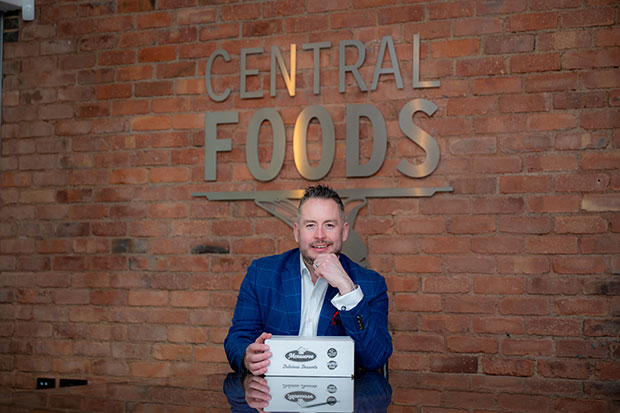
With a diverse portfolio in meat, poultry, vegetarian, free-from, vegan, buffet, bakery and dessert lines, Central Foods supplies over 250 wholesalers nationwide.
The company distributes over 75,000 cases per week, with over 300 weekly delivery points. Central Foods holds BRCGS certification, reflecting the highest food safety and quality standards across its portfolio. Oli Sampson, Managing Director of Central Foods, tells Wholesale Manager how the company has survived and thrived for 30 years.
Central Foods is celebrating 30 years in 2026. What has been the key to the company’s longevity?
I think the key has been our ability to keep evolving while staying very clear about what we are here to do for wholesalers and foodservice operators. Central Foods has always been focused on making life easier for wholesale customers, whether that is through mixed pallet consolidation, a broad frozen portfolio, or practical support that helps wholesalers manage cost, risk and operational complexity.
Over 30 years, the market has changed significantly, but the fundamentals have not. Food operators still need quality, consistency, reliability and suppliers that understand the pressures they face. We have also continued to innovate, broaden the range and adapt to changing menu trends while maintaining robust service levels and dependable supply. That combination of experience, flexibility and customer focus has helped give the business long-term resilience.
What have been your biggest priorities in your first year as managing director?
My biggest priority has been ensuring Central Foods continues to support wholesalers in a very challenging market, while also keeping the business progressive in how we think about products, service and long-term opportunities.
Cost pressure remains a major issue across the supply chain. Rising ingredient, transport and fuel costs continue to impact the sector, while changing eating habits are also reshaping demand. Lumina Intelligence has highlighted growing interest in healthier, lighter and more flexible eating occasions, while the increasing visibility of GLP-1 weight-loss medications is adding further discussion around portion sizes, snacking habits and menu balance across hospitality.¹
Against that backdrop, a big part of the role has been ensuring we help wholesalers and food operators respond with the right product mix, the right support and a model that reduces risk.
Another priority has been reinforcing our position as more than just a product supplier. We want to be seen as a business that helps wholesalers offer more choice, respond to operator needs and unlock growth opportunities across categories. Innovation, menu support and strong supplier partnerships all play a part in that.
What are the biggest pressures wholesalers are facing right now?
Wholesalers are still balancing several competing pressures. Margins remain under strain, cash flow matters more than ever, and there is constant pressure to offer food operators more choice without taking on too much stockholding risk.
Wider market conditions are intensifying those challenges. The Food Standards Agency reported that 24% of respondents were worried in December 2025 about being able to afford food,² while ONS said food and non-alcoholic beverage prices were up 3.3% in the 12 months to February 2026.³
Continuing instability across the Middle East is also contributing to volatility in energy, fuel and shipping costs, with those increases feeding through into ingredient prices, transport costs and, ultimately, the prices paid by food operators and consumers.
At the same time, eating habits are changing. IGD has highlighted growing consumer focus on health, balance and value, while food operators are under pressure to offer menus that deliver convenience, flexibility and perceived quality at the right price point.? The increasing discussion around GLP-1 medications is also contributing to broader conversations around portion sizes, lighter meals and changing consumer behaviour across hospitality.
That is where our model is particularly valuable. By offering mixed pallet consolidation, we provide wholesalers an opportunity to place lower minimum order quantities instead of buying directly from manufacturers, freeing up some much needed cashflow.
The aim is to make it easier for wholesalers to serve a wide customer base without unnecessary risk.
How does Central Foods’ mixed pallet consolidation model help wholesalers manage risk and cash flow?
It gives wholesalers much more flexibility. They do not have to commit to large volumes across individual manufacturers just to access a broader range. Instead, they can buy more efficiently, add variety to their offer and reduce the amount of capital tied up in stock. That matters because wholesalers are under pressure to keep ranges fresh and relevant, while also managing freezer space, cash flow and the risk of slow-moving lines.
Our model of one order, one invoice and one delivery helps simplify that process. It means wholesalers can build a broader, more responsive range with less complexity and less exposure.
What does being a “solution provider” mean in practice?
For us, it means looking beyond simply supplying products. Of course, breadth of range and product quality are important, but wholesalers also need a partner who understands how products help solve practical challenges for food operators. That might be labour shortages, food waste, menu consistency, cost control or the need to introduce something new without overcomplicating the kitchen.
Rising protein costs are a good example. AHDB reported that UK beef prices reached record highs during 2025, with cattle prices increasing by more than 40% year-on-year in some areas of the market as supply tightened and production costs remained high.? That has created significant pressure across sectors including QSR, education and contract catering, where operators are increasingly focused on value, yield and portion control. Products such as KaterVeg! Vegan Mince can help operators manage those pressures by offering a flexible, cost-effective alternative that supports menu flexibility, consistency and cost management while remaining easy to prepare.
In practice, being a solution provider means offering a broad enough portfolio to support multiple sectors and menu occasions, backing that up with clear product information, technical support and sales materials, and helping wholesalers support their own customer base with ideas, innovation and dependable service.
Our portfolio includes household names such as Tyson, Gressingham and We Love Cake, alongside our four own brands — KaterBake, KaterVeg!, Menuserve and Golden Valley Foods — allowing wholesalers to access both recognised brands and practical foodservice solutions through one supplier.
How important are innovation and NPD to the business?
They are very important. Innovation has always been a key part of how Central Foods stays relevant to wholesalers and the food operators they supply. Foodservice does not stand still, and neither can we. Tastes change, dayparts evolve, and food operators want products that help them keep menus fresh while still delivering consistency, ease of service and strong commercial returns.
Innovation runs strongly across our four own brands.
Golden Valley Foods continues to evolve within poultry, with products including nuggets, fillets, goujons, wings and chicken steaks designed around convenience, consistency and strong performance in high-volume catering environments. Parts of the range are gluten-free, helping wholesalers and operators cater for coeliac and gluten-free dietary requirements.
KaterVeg! reflects growing demand for vegetarian, vegan and allergen-aware menu solutions. The range includes products suitable for vegan, vegetarian and gluten-free diets, while some lines also meet PHE 2024 salt targets. The coated and uncoated gluten-free vegetable burger range is free from all 14 declarable allergens, helping operators manage increasingly complex dietary requirements.
Menuserve continues to expand across both centre-of-plate and dessert categories, providing practical, labour-saving products designed specifically for professional catering teams where consistency and ease of service are critical. The range now includes nine roulade flavours, with Lemon Roulade, Peach Bellini Roulade and Strawberry & Prosecco Roulade particularly well suited to summer menus and afternoon tea occasions.
KaterBake spans both sweet and savoury bakery, from gluten-free wraps, flatbreads, bao buns and pizza bases through to donuts, waffles, crumpets and apple fry pies. Central Foods was also among the first businesses to help bring bao buns into UK foodservice, reflecting our long-standing focus on identifying emerging food trends with genuine commercial potential.
Alongside our own brands, supplier partnerships continue to play an important role in innovation across the portfolio. Tyson Foods brings strong flavour-led innovation through products such as Red Thai Chicken Strips and Crispy Shredded Chicken, while Gressingham Duck supports premium menu development. Tipiak continues to strengthen the premium canapé and dessert category, Frank Dale supports buffet and event catering through its frozen thaw-and-serve and heat-and-eat range of quiches, tarts, pies, savoury canapés, sweet canapés and miniature cakes, and We Love Cake supports growing demand for high-quality gluten-free sweet bakery products.
More recently, our relationship with Le Duc is another example of that approach in action, bringing in a specialist range of vegetarian appetisers, including mozzarella sticks, onion rings and Mac ‘N’ Cheese Bites, to help wholesalers and operators tap into growing demand for sharing, grazing and informal eating.
For us, innovation is not about launching something new for the sake of it. It is about providing wholesalers with relevant, on-trend and commercially saleable products that help them meet changing customer demand, open new menu opportunities and grow sales with confidence.
What support do you offer wholesalers beyond simply supplying products?
We support wholesalers in several practical ways beyond supply alone. That includes clear product data, specifications and downloads, along with lifestyle images, pack shots and technical information to help sales teams sell more effectively. We also invest in digital marketing, PR and targeted promotional support to help bring products to life in the market.
Alongside that, we work closely with wholesale customers on the broader commercial opportunity. That includes helping them think about menu development, category opportunities and how different parts of the range can work for different food operator requirements.
We want to make it easier for wholesalers not only to buy from us, but also to grow sales from the products they stock.
What are your priorities for the rest of 2026?
Our priorities for the rest of 2026 are to build on the momentum already within the business by strengthening the portfolio, supporting wholesalers through a challenging market and developing ranges in areas where we can see genuine commercial opportunity.
Quality, consistency and practical support remain central to that, as does making life easier for wholesalers through a broad, relevant frozen offer and a model that helps reduce risk and complexity.
Innovation and NPD will remain major priorities. Recent launches and developments across the portfolio include We Love Cake Raspberry Ripple Slices and Chocolate Orange Slices, both individually wrapped, wheat, gluten and milk-free sweet bakery options supplied in 1 x 18 cases; Tyson Red Thai Chicken Strips and Crispy Shredded Chicken, which support demand for convenient, flavour-led poultry products; and Tipiak Vegan Canapé Selection, a 1 x 36 selection of six vegan canapés.
We are also exploring opportunities within potato-based products and further expansion of the Menuserve dessert range, alongside wider supplier partnerships and category development opportunities.
More broadly, the focus remains on helping wholesalers offer more choice while maintaining margins, managing stockholding risk and responding confidently to changing food operator demand.
Comments are closed.