

There is a clear and sustained shift towards more nutritious, functional breakfast choices, with shoppers increasingly looking for foods that support energy, satiety and overall wellbeing.
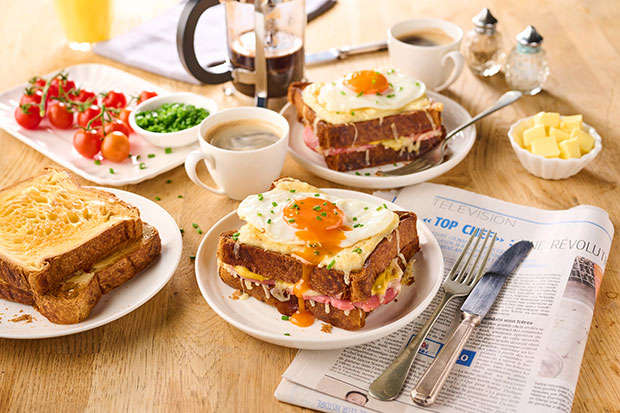
Rather than changing habits completely, consumers are making simple swaps within familiar categories, which is driving strong growth in speciality bakery.
Rye bread is a standout performer here, as it naturally delivers on key health cues such as fibre and protein while remaining versatile and satisfying.
Louise Reynard, Customer Development Director, UK at St Pierre Groupe comments on behalf of the Baker Street brand: “This is translating into strong market performance, with the rye category growing ahead of the wider bread segment and Baker Street leading that growth as the UK’s number one rye bread brand (Circana).”
Baker Street’s rye range continues to be a major driver of growth, with Seeded Rye and Rye & Wheat loaves performing particularly strongly. These products tap directly into demand for healthier breakfast options that still deliver on taste and convenience. Alongside this, core bakery staples such as sliced loaves, burger buns and rolls remain consistent high-volume sellers, reflecting their versatility across breakfast and beyond. By offering both everyday staples and more premium, health-led options, Baker Street provides wholesalers with a well-rounded range that caters to a broad spectrum of shopper needs.
“Wholesalers should support customers in building a fixture that combines core staples with growing segments such as rye, ensuring they can meet both everyday needs and emerging health trends. There is also an opportunity to lean into more substantial, sit-down breakfasts driven by hybrid working, which is increasing demand for versatile breads that support a wider range of meal occasions. A strong breakfast offer should deliver on convenience, quality and choice, helping retailers meet evolving shopper expectations while driving value growth,” adds Reynard.
“To maximise sales, wholesalers should focus on availability, range efficiency and clear segmentation within bakery. Stocking a balanced mix of high-volume staples alongside fast-growing, higher-value lines such as rye allows retailers to trade shoppers up while maintaining core sales. Extended-life products, such as Baker Street’s range, also provide a key advantage by reducing waste and improving stockholding confidence, particularly for independent retailers. In addition, supporting cross-merchandising opportunities, for example, linking bakery with spreads and hot drinks, can help drive basket spend and reinforce breakfast as a key daily mission.”
Baker Street works closely with wholesalers to drive growth by focusing on strong availability, effective ranging and clear in-depot visibility. By offering extended-life products, the brand helps wholesalers and their customers manage stock more efficiently while maintaining quality. In addition, recognisable branding and consistent product quality help drive confidence at both wholesaler and retailer level, ensuring Baker Street products stand out and deliver strong rates of sale across the channel.
Louise Reynard, Customer Development Director, UK at St Pierre Groupe comments on behalf of the St Pierre brand: “Products that offer versatility are key for breakfast but the concept of ‘versatility’ looks different for different breakfast occasions. St Pierre offers individually-wrapped multipacks which meet the need for quick, grab-and-go breakfasts but equally meet the quality demands of a more leisurely weekend breakfast or brunch. Striking this balance has earned the brand the title of fastest growing top 10 continental brand in the UK, fastest growing croissants brand in the UK and the best-selling crepe in the UK (Circana).”
These individually-wrapped breakfast items are catering to shoppers who look to bakery for both taste and ease of preparation, but this isn’t always because the items will be eaten ‘on-the-go’ (Kantar). In fact, about half of global consumers now eat breakfast at home more often, driven by cost considerations and perceived convenience (Innova).
Despite ongoing cost pressures, shoppers are not turning away from indulgence altogether. Instead, they are seeking affordable treats that still deliver on quality and enjoyment. Breakfast has become an important moment for small, everyday indulgences, with shoppers willing to spend slightly more on products that elevate their morning without significantly increasing overall spend.
Continental bakery plays strongly into this trend, offering a better-value alternative to coffee shops while still delivering a premium experience. For wholesalers, this creates a clear opportunity to support retailers with ranges that balance value and quality, enabling shoppers to ‘trade up’ within accessible price points.
A key area of innovation for 2026 is the launch of St Pierre Croissant Loaf, a category-first product that combines the familiar format of sliced bread with the taste and texture of a croissant. Designed to help shoppers trade up from standard toast, the loaf delivers a light, flaky texture and rich flavour, while remaining convenient through its pre-sliced format.
This hybrid format taps into growing demand for products that offer both familiarity and something new, making it well suited to wholesalers looking to bring incremental value to the breakfast fixture and attract new shoppers into the category.
It’s been a great year for breakfast, with occasions up 4 per cent (Kantar), category value also up 4 per cent and volume in growth, too – up 1 per cent in the last year (Circana). Breakfast has grown ahead of total bakery and this is being driven by ‘continental’ – adding an extra £30 million to the category (Circana).
For St Pierre, this is great news, because croissants and pain au chocolat are the strongest performers in the sector and St Pierre is perfectly placed to deliver premium at-home breakfasts that meet consumer demand for quality, whilst balancing convenience. As a result, St Pierre is the fastest-growing top 10 continental brand in the last year, with two SKUs in the top four branded continental market – a sector that has more than 200 lines (Circana).
The biggest opportunity in breakfast lies in premiumisation and versatility. Shoppers are increasingly looking to elevate everyday routines, trading up to products that deliver on taste, quality and experience without adding significant cost. This makes bakery a key category, as it offers simple ways to enhance familiar meals.
“Wholesalers should focus on supporting ranges that work across multiple breakfast occasions – from quick weekday missions to more indulgent weekend brunches – while keeping the fixture easy to shop. Clear segmentation and a strong mix of core staples and premium options will help retailers meet evolving shopper needs without overcomplicating the offer,” advises Reynard.
“Wholesalers should prioritise availability, visibility and trade-up within their depots. Breakfast missions are often habitual and time-sensitive, so ensuring strong availability of best-selling lines, particularly individually wrapped morning goods and core bakery staples, is critical.
“Structuring ranges to include clear good, better and best options will help retailers encourage shoppers to trade up, while secondary siting – such as merchandising morning goods alongside hot drinks – can drive impulse purchases and increase basket spend. Focusing on versatile products that work across both on-the-go and at-home occasions will also help maximise rate of sale and reduce risk.”
Nicola Blackmore-Squires, Marketing Director of Ornua Foods UK & Europe, owner of the Kerrygold brand, comments: “Kerrygold’s Irish grass-fed cows graze on lush green pastures to produce grass-fed milk that gives Kerrygold butter its delightfully creamy profile, unmistakeable flavour, and famous golden glow. As such, Kerrygold represents a ‘golden opportunity’ for retailers seeking to build added-value butter sales, not only around breakfast, but all meal occasions. When it comes to growth in butter, Kerrygold leads the way with sales increasing by +32% in value and +14% in volume over the last year (Circana). Today, Kerrygold is the fastest growing butter brand in the UK with our Kerrygold block butter now No.2 in market.
“The Kerrygold success story is being replicated in the convenience sector where the brand is performing strongly, again outstripping other major brands with volumes sold through UK convenience stores growing over the last 12 months by 26.7% in value and 14.4% in volume. A key driver in boosting sales in convenience stores is the availability of a great value 200g Kerrygold block priced marked pack which retails for £2.79 – pictured. Indeed, sales of Kerrygold price marked packs are up over 16.7% by value and 8.2% in volume year on year with over 2.3 million packs having been sold in the last 12 months in convenience stores across the country (Circana.)”
Kerrygold is being supported by a comprehensive above and below the line marketing campaign which will run throughout 2026.
Paul Muench, Wholesale & Convenience National Account Manager at Nestlé Cereal Partners, comments: “Cheerios and Honey Cheerios are currently our top selling products within the convenience channel, both seeing a +14% uplift based on MAT vs last year (TWC). Cookie Crisp remains strong within the channel growing at a more modest 3.3% (TWC) but still delivering strong retail sale value. Nesquik is steadily becoming a top selling SKU with YoY growth of 45% (TWC) within the same time period.
“We currently have a strong NPD pipeline within 2026 and beyond, with Cheerios Very Berry recently being launched into the convenience space late last year, with more members selecting this to be sold to consumers.”
YTD the Ready to Eat Cereals category within the convenience channel is facing challenges with -3.25% (TWC) decline vs the same period last year. Despite the category decline Nestle Cereal Partners are holding steady at 0.5% (TWC) growth. Nestle Cereal Partners are outperforming the category across Best-One / Costcutter / Premier and Unitas Facia stores.
“Ensure your category displays all the top sellers within that given category,” advises Muench. “Consumers look for recognisable and established brands when selecting what they want to buy. Make sure you are aware of any trends that are dictating shopping habits and ensure these are within your category. All products within the category should be visible and available for your customers.”
This year Nestle Cereal Partners is investing more than ever in its brands. Shredded Wheat and Cheerios have been supported by TV adverts, with a second burst running later in the year.
“To maximise sales, wholesalers need to ensure all products are available and visible within their depots, if retailers can’t find what they are looking for, they won’t buy it. They need a full promotional plan giving retailers choice across all SKU’s within the category,” adds Muench.
“Online ordering is becoming increasingly prevalent, therefore investing in online and digital platforms are a must to accommodate this growing trend as well as maintaining their more traditional walk-in customers.”
“I engaged with wholesalers at a national and local level to maximise sales not just for the individual wholesaler, but for the buying group as a whole,” continues Muench. “Promotional plans are submitted and delivered into the channel resulting in SKU’s being on promotion nationally. We run local promotions to target a certain wholesaler’s customer base and support with special wholesaler events, such as trade days, weekly specials and one day specials. Joint Business Plans are also proposed to deliver mutual growth, at a local and national level. Regular meetings are also put in the diary to update wholesalers of any trends we may be seeing, NPD launches, category changes and sales performance.”
Oli Sampson, Managing Director of Central Foods, comments: “Breakfast is now the fastest-growing out-of-home occasion, up 13.7% year on year, and practicality influences 44.6% of breakfast choices. Kantar also notes that brands delivering affordability, portability and convenience are best placed to capture spend (Kantar).
“For wholesalers, that means stocking breakfast products that are quick to serve, easy to merchandise and simple for operators to handle during busy mornings. KaterBake Belgian Plain Waffles from Central Foods fit that need well. They are individually wrapped for easy portion control and can be served at room temperature or microwaved for 20–30 seconds from frozen and perfect for vegetarians and vegans.”
KaterBake Baked Crumpets also work strongly for quick breakfast service. They are ready baked, suitable for vegetarians and vegans, packed 9 x 8 within a 1 x 72 case, and can be served after a short toast or grill, giving operators a familiar breakfast product that works across cafés, coffee shops, leisure and grab-and-go environments.
The evidence suggests shoppers want affordable treats for breakfast, but with value firmly in mind. The Food Standards Agency said 24% of respondents were worried in December 2025 about being able to afford food, while food prices remained the top concern for 92%. That means breakfast products must feel worth the spend.
At the same time, consumers are not looking for the cheapest option at any cost. Data cited by Lumina Intelligence shows that value, quality and health are all shaping venue choice. So there is clear room for affordable breakfast treats that still feel a little more special.
This is where waffles and crumpets both have a role. A Belgian waffle offers operators an easy trade-up breakfast or brunch option that still feels accessible, while crumpets remain a dependable, low-cost breakfast base that can be topped sweet or savoury to suit different budgets and formats.
There is clear momentum behind healthier and more functional breakfast choices. BakeryInfo, citing Kantar, reported that an extra 604 million breakfasts were chosen because of their health credentials in the past year. The market is also seeing ongoing innovation around protein and fibre. FDF examples from 2025 highlight convenient breakfast and bakery launches built around fibre and protein, including high-fibre muffin bars and high-protein, high-fibre bakery formats.
For wholesalers, that does not mean every breakfast line needs to make an overt health claim. It means ranges should balance value, convenience and inclusivity. Both KaterBake Belgian Plain Waffles and KaterBake Baked Crumpets are suitable for vegetarians and vegans, giving wholesalers flexible lines that can sit comfortably within a broader breakfast offer.
Within the breakfast bakery, two standout KaterBake lines are Belgian Plain Waffles and Baked Crumpets. The waffles deliver a more indulgent breakfast or brunch option, while the crumpets provide a familiar everyday staple. Together, they give wholesalers a useful mix of trade-up and core breakfast appeal, as well as sweet and savoury versatility.
The waffles are supplied in 1 x 20 cases and have a defrosted shelf life of 45 days when wrapped. The crumpets are supplied in 1 x 72 cases, packed 9 x 8, with a defrosted shelf life of 3 days.
New product development remains a key focus at Central Foods. The business positions innovation as an ongoing priority and supports wholesalers with a broad frozen offer, ongoing NPD and practical product solutions across categories.
Breakfast is a category where that matters, because value, speed of service, portability and menu flexibility are all influencing ranging decisions. Alongside a portfolio of more than 250 products and supply through more than 250 wholesalers nationwide, Central Foods continues to support wholesalers with products that reflect changing operator and consumer needs.
For breakfast specifically, the current focus is on proven KaterBake lines that help wholesalers cover core morning missions effectively.
KaterBake is well placed in the breakfast bakery category because it gives wholesalers products that are simple to sell into foodservice: consistent, easy to prepare, easy to store and flexible enough to work across different sectors and dayparts.
That is particularly important in breakfast, where wholesalers need products that work just as well in a café or coffee shop as they do in education, travel, leisure or workplace catering.
“Wholesalers should focus on breakfast products that solve real operator problems. Breakfast is growing, but buyers still need ranges to work hard, with practicality remaining a major driver of choice,” adds Sampson. “My advice would be to stock a balanced breakfast offer made up of one or two dependable everyday lines, one portable product and one line that offers an easy trade-up. Crumpets and waffles fit that model well because they are familiar, versatile and easy for operators to adapt with minimal additional labour.”
Central Foods provides value-added marketing support to wholesalers, including digital marketing, PR activity and targeted promotions. The Central Foods website also supports sales teams with high-resolution lifestyle images, pack shots, product guides and technical specifications for individual products, helping wholesalers select, merchandise and promote ranges more effectively.
A dedicated sales team also works closely with wholesale customers to provide tailored solutions and ensure they are getting the most from the Central Foods range.
That kind of support is important in breakfast, where simple ideas around serving suggestions, pricing and merchandising can make a real difference to morning sales.
“To maximise breakfast sales, wholesalers need to think in terms of mission, not just product. The winning ranges will be those that cover quick grab-and-go breakfasts, affordable everyday breakfasts and slightly more indulgent trade-up options. Breakfast is the fastest-growing out-of-home occasion, and practicality remains a key driver,” says Sampson.
“Wholesalers can support that by making it straightforward for operators to buy breakfast solutions – both in depot and through their sales teams. That means clear signposting, simple menu inspiration, strong availability and products that help operators serve quickly without adding complexity or waste.”
Central Foods works closely with wholesalers through its mixed pallet consolidation model, offering more routes to market than any other distributor in the sector. With one order, one invoice and one delivery point, wholesalers can reduce complexity, improve cash flow and broaden their range without taking on unnecessary risk.
The business also supports wholesalers with clear product data, downloads and sales materials, helping teams sell with confidence. In a category such as breakfast, where reliability, value and ease of service all matter, that combination of supply model and practical support can help wholesalers grow sales more effectively.
Liam Stringfellow, Brand Marketing Manager at Finsbury Food Group, comments: “Grab and go as well as quick serve convenience continues to grow. Alongside this, the number of consumers eating out for breakfast has increased as they continue to look for more experience-led dining.
“Consumers are continuing to look for convenient, trend-led options in QSRs which lead the way for growth as these provide the best value-for-money options. Growing cost anxiety is pushing households and businesses to save more, leaving spending growth concentrated amongst higher-income groups.”
The health scene has blown up massively over the past 12 months, with 52% of consumers having a less favourable view of ultra-processed foods than they used to. (Lumina Food Strategy Forum – Q1 2026). Fibre and protein are taking centre stage for consumers’ attitudes to what is important in their diet throughout the day.
Finsbury Food Group’s best-selling products include Brioche Style Buns and Gourmet Brioche Bun, offering a mix of butter and vegan options without compromising on taste. These buns have an incredible flavour and can be paired with endless fillings for all meal times, including breakfast.
“NPD is a big focus for Finsbury Food Group as a whole and innovation is key to Kara, our wholesale bakery’s, future plans. We are constantly growing our product portfolio to match consumer preferences and market demands. In January at Kara, we launched our Gourmet Slider Bun, a 3-inch premium bun which helps simplify kitchen operations by serving as a slider on a main menu and as a kid’s burger on the kids’ menu,” adds Stringfellow.
“With the arrival of GLP-1s, research suggests that people are looking for smaller meals, such as burger sliders and snacking menus, and this trend is likely to grow, making portion control even more important. 10% of UK consumers are not using GLP-s1 yet but are considering it. (Lumina Food Strategy Forum – Q1 2026). Later this year, we have further NPD launches, including a more premium teacake and hot dog rolls, alongside some exciting sliced bread projects and bun development leading into next year.”
Kara, Finsbury Food Group’s dedicated wholesale bakery site, is performing well in the category, being a key provider to multiple sectors, including education, catering, hospitality and quick serve. This is boosted by a clear path to further the brand’s growth journey in foodservice through its recent investment plan. This includes additions in the production line to offer more premium finishes to rolls and loaves. The pizza doughball line has been upgraded to fulfil higher demand and improve overall efficiencies in the bakery.
“We find showing NPD (New Product Development) off at trade shows, exhibitions and member meet-ups is a fantastic way to grow personal connections with our customers and display the exciting products that we have coming up. Alongside this, we advertise with our customers across their magazines and websites alongside all our native channels, website and social media,” says Stringfellow.
“Have strong future plans on the direction in which you want to grow, but also leave room to be reactive to market trends and customer needs. Some flavour profiles have been around for a long time, such as sourdough, but due to social media and health influxes this market has grown exponentially in the past year. Being aware of the market direction is vital.”
Stéphanie Brillouet, Marketing & Innovation Director, Délifrance, comments: “Today’s breakfast landscape is being shaped by three converging demands: affordable indulgence, on-the-go convenience, and evolving health priorities. For wholesalers, this presents a clear opportunity to support operators with products that balance pleasure, practicality and perceived value.
“Affordable treats remain firmly in demand too. Consumers are increasingly seeking breakfast options that feel like a small reward without carrying a premium price tag. Pastries continue to resonate strongly, remaining staples of the morning occasion, with 91% of pastry consumers enjoying them in the morning and over half choosing to buy them out of home (Délifrance). Croissants, pains au chocolat and Danish pastries remain some of the most popular choices – delivering consistent satisfaction, combining familiarity with indulgence. Consumers want products that feel like a treat but still fit busy morning routines. Importantly, taste is the primary driver of choice, with 57% of consumers citing it as the most important factor (Délifrance). This reinforces that while value matters, it cannot come at the expense of flavour or quality. Ultimately, shoppers are looking for “affordable luxury” – products that elevate the everyday without overcomplicating it.”
Breakfast trends point towards a continued blurring of occasions, with savoury snacking playing an increasingly important role. Consumers are leaning into savoury-led breakfast choices that feel satisfying, portable and versatile. Products such as Délifrance cheese twists and ham & cheese baskets answer this demand perfectly, offering bold flavour, strong visual appeal and an easy grab-and-go format that works across breakfast, brunch and snacking occasions.
Convenience and portability are equally important. Modern morning routines are increasingly time-pressured, and breakfast needs to fit seamlessly into them. Sandwiches have emerged as the number one breakfast and brunch choice in the UK (Délifrance), underlining demand for handheld, filling options that can be eaten on the move or at a desk. Format plays a key role with half of consumers favouring neat, easy-to-eat products (3Gem). Interestingly, while speed is important, quality remains paramount, with fewer than one in five actively opting for traditional grab-and-go (3Gem). This highlights that consumers are not willing to sacrifice freshness or quality for convenience alone.
Health is evolving but isn’t set to replace indulgence. Rather than a shift away from treats, there is a growing expectation that even indulgent formats can offer added nutritional value. Protein is now a priority for 42% of consumers, with high-protein bakery emerging as a fast-growing segment (Innova). At the same time, interest in gut health is accelerating, with sourdough gaining traction thanks to its digestibility and flavour benefits.
Sourdough conversations are up 157% year on year (Délifrance), while digestive health claims feature in 22% more bakery launches (Innova). Improved digestibility, fibre content and nutrient absorption appeal to health-conscious consumers, with 48% actively seeking fibre and probiotic support. Beyond health, sourdough’s natural flavour-enhancing qualities are also driving its growing use across viennoiserie. This signals an opportunity to incorporate functional ingredients into familiar formats, such as protein-enriched pastries or sourdough-based breakfast items, allowing consumers to make “better-for-you” choices without compromising on overall satisfaction.
“Ultimately, balance is key,” adds Brillouet. “Today’s breakfast consumer is not likely to choose between indulgence, convenience and health. They are expecting all three. For wholesalers, success lies in helping operators deliver high-quality, great-tasting products that are easy to serve, easy to eat and aligned with evolving health expectations. By focusing on standout bakery formats, dependable bestsellers and subtle innovation, wholesalers can ensure they are meeting the needs of a breakfast occasion that continues to grow in both importance and complexity.”
Tom Styman-Heighton, Development Chef at Funnybones Foodservice, comments: “It’s well known that breakfast is the most important meal of the day, but the reality is that most Brits opt for simple cereal or toast in the morning at home. Dining out at breakfast time is usually due to being on-the-go bright and early, or customers setting themselves up for a good day with an early treat.
“To appeal to busy grab-and-go diners, operators should ensure their offering is easy to eat on the move. Anything that requires cutlery or is messy will inevitably hinder the convenience factor that makes takeout breakfast so attractive in the first place. King of the breakfast on the go of course is the mighty breakfast wrap and it’s very easy to throw together. Simply bundle eggs, sausage, bacon (or vegetarian equivalents) and (optional) baked beans, and hashbrown into a soft tortilla, toast, and voila! Funnybones frozen tortillas reduce unnecessary food waste and maximise storage convenience and require a matter of minutes to defrost.
Corn tortillas are also particularly popular with customers with dietary restrictions, as they benefit from being naturally low in salt, carbs, and calories, do not contain gluten, and are vegan-friendly. These versatile bases are great staples for wholesalers, as they can be used across a variety of dishes.”
For a meatier alternative, chefs could swap the classic sausages and bacon for some juicy pulled meats. Funnybones’ new Rio Pacific pulled smoked meats use cuts specially chosen to yield more flavour, including pork shoulder, and halal-friendly beef brisket and chicken thigh. Authentically smoked with hickory wood chips in an open smoker for up to 14 hours to result in a superior taste and texture, these pulled meats arrive lightly seasoned so chefs can customise them with their choice of sauce or seasoning for maximum culinary creativity. The convenient 2 x 1kg format can be kept refrigerated for up to 5 days once defrosted, so there’s no risk of unnecessary food waste. These meats can be used across breakfast menus, in wraps, breakfast rolls, or to add protein to omelettes or egg muffins.
“While grab and go dominates the breakfast market, it’s also important to consider diners that may be eating out for breakfast as an indulgent treat that wish to sit-in. Likewise, wholesalers should ensure they have free-from products to appeal to operators looking to cater to customers with dietary restrictions, such as gluten free and vegan options. Catering to these requirements can seem like a daunting challenge, especially when it comes to complex free-from recipes,” adds Styman-Heighton.
“Funnybones’ thick, fluffy, American-style pancakes are available in a vegan-friendly format. Arriving frozen, the ready-to-cook pancakes eliminate the stress of caterers achieving that light yet rich consistency every time. Featuring a subtle vanilla aroma, these pancakes are compatible with a range of different toppings, so they’re ideal for brunch or dessert menus. To appeal to health-conscious diners, top with fruit coulis and seasonal fruit; for something more indulgent chefs could smother them in melted chocolate and toasted marshmallow; and for a more savoury option, combine bacon and syrup. Funnybones’ Encona Canadian Maple Chilli Jam offers the sticky sweetness of a classic maple syrup, with the fiery twist of hot chillies.”
Samantha Winsor, Marketing Manager, Lantmännen Unibake UK, comments: “Both speed and convenience remain essential for the breakfast category, specifically for younger commuters whose morning routines are often centred around grab-and-go formats. This group is highly influenced by visual appeal and impulse cues, gravitating towards pastries, breakfast baps and convenient bakery items that look fresh, attractive and ready to eat.”
With food-to-go now growing ahead of the wider eating-out market, breakfast formats must be quick, convenient and easy to hold. This is where buns and speciality carriers really come into their own. Lantmännen Unibake’s research shows that consumers are highly receptive to breakfast in a bun, with brioche, gourmet and glazed formats – like the Lantmännen Unibake’s Americana buns – performing particularly well and giving operators a clear opportunity to trade up. Classic fillings such as bacon, sausage, fried egg and hash brown still dominate, because they are familiar, flavourful and travel well.
Viennoiserie is predominantly viewed as a core breakfast occasion, with growth opportunities emerging from extending this occasion into indulgent treating throughout the day. Premiumisation offers a clear route to elevate the experience, whether through extra fillings, toppings or richer flavour profiles. At the same time, Viennoiserie can take inspiration from the success of Danish pastries by incorporating engaging, on-trend seasonal flavours that add excitement and encourage consumers to purchase throughout the day.
Value for quality is impacting consumer decisions far more than price point. While consumers are more price-conscious, they are still willing to trade up if they feel products deliver in taste, ingredients or craftsmanship. Lantmännen Unibake’s Americana data supports this, revealing that 74% of consumers will pay extra for a gourmet breakfast bun, with brioche and glazed formats ranking highest in preference (Opeepl).
The rising cost of living remains one of the biggest threats to the breakfast occasion. Although spend per visit has increased, sustained pressure on disposable incomes may push some consumers to make savings by preparing breakfast at home, particularly during the working week. If household budgets continue to tighten, this could dampen out-of-home growth despite consumers’ clear appetite for premium and convenient options.
Susan Nash, Trade Communications Manager at Mondelez International, comments: “Consumers are increasingly seeking quick, portable and easy-to-eat breakfast options, driven by busy lifestyles and the rising demand for on-the-go consumption. With 53% of shoppers seeking on-the-go snacking solutions (Harris), and 88% of UK consumers snacking at least once a day (Euromonitor), we expect individually packaged products that can be easily eaten on the move to be a key driver of category growth throughout 2026.
Ranges from brands such as Cadbury Brunch and belVita offer a variety of formats that meet consumer demands of convenience without compromising on taste or flavour. BelVita continues to expand its appeal with flavours such as its limited-edition Duo Crunch Choco Hazelnut, combining chocolate – the No.1 flavour in healthier biscuits – with high fibre and its signature blend of five wholegrains.
The Cadbury Brunch range taps into the demand of satisfying on-the-go breakfast options, blending oats, crispies and bran flakes with a drizzle of honey and Cadbury’s signature chocolate. The range also expanded with a value pack of its top-performing SKU in healthier biscuits (Nielsen), Chunky Choc Chip. Featuring 10 bars, this format is designed to drive value and cater to larger households, supporting both shopper needs and retailer sales.
Stephen Jones, UK Sales Director, Grupo Bimbo UK comments on behalf of the NYB brand: “Breakfast is increasingly shaped by a demand for convenience, quality and versatility, as shoppers balance busy morning routines with a desire for more enjoyable, restaurant-style food at home. In the convenience channel, products that are quick to prepare but still deliver on taste and satisfaction remain key drivers of repeat purchase.
Our bagels are known for their authentic chewy texture and bold flavour – that classic New York style that’s boiled and then baked. It’s that distinctive quality that keeps shoppers coming back and helps wholesalers support their retail customers in driving repeat purchase.”
Alongside this, there is strong momentum behind the at-home brunch and elevated breakfast trend, with consumers inspired by café culture and social media to recreate indulgent breakfast moments at home, particularly at weekends. Bagels are well placed to meet this demand, offering an authentic and versatile base for both simple and more premium breakfast combinations. New York Bakery bagels are ideal for wholesalers looking to help retailers trade up their breakfast offering without added complexity.
The most effective way for wholesalers to grow breakfast sales is by focusing on products that deliver enjoyment, convenience and strong value, while working across multiple shopper missions. Taste remains a key driver at breakfast, particularly in bakery, so stocking recognised brands that retailers trust for flavour and quality is essential to drive repeat purchase and loyalty.
Consumers are becoming more mindful of what they eat at breakfast. For many, this means choosing foods that balance indulgence and nutrition, without sacrificing comfort or enjoyment. Pairings such as New York Bakery Sesame Bagels with avocado and eggs, or Original Bagels with smoked salmon, reflect this shift, offering wholesalers strong product solutions that retailers can use to inspire shoppers with more considered breakfast choices.
Versatility is equally important. Products that are quick to prepare and flexible enough to stretch beyond breakfast into lunch or light meals help retailers maximise sales throughout the day. Classic bakery staples like New York Bakery bagels meet this need well, giving wholesalers a dependable product to supply that works across multiple meal occasions.
“Wholesalers can support their retail customers by prioritising ranges that deliver both efficiency and waste reduction. Longer shelf-life products allow stores to maintain availability while minimising wastage, which is particularly important in the convenience channel. New York Bakery’s Original and Sesame Bagels have a 29-day shelf life, helping wholesalers offer solutions that support better stock management and reduced waste in store,” adds Jones.
“Clear merchandising and strong visibility within the bakery fixture further help shoppers quickly find trusted breakfast options during top-up and impulse missions. Wholesalers play a key role in supporting this by providing guidance on ranging, layout and best-selling lines.
“To maximise breakfast sales, bakery should be positioned as a high-visibility destination, ideally located early in the shopper journey where it can capture top-up and impulse missions. Bread and morning goods are a core footfall driver in convenience, so wholesalers should ensure their retail customers are equipped with the right range and advice to keep fixtures easy to find and well stocked.”
Fabien Levet, Commercial Manager at Pidy UK, comments: “The breakfast occasion is split between grab-and-go options for early-morning commuters, and decadent brunch for those opting for early indulgence. When helping operators cater for the latter group, wholesalers should pay particular attention to presentation. Breakfast and brunch are as much about the experiential element of dining out as it is about the food offering, and having a stunning, social media-worthy spread is vital.
“Elevated presentation can be achieved with simple tweaks. For example, rather than a standard eggs benedict using English muffins, chefs could take inspiration from Pidy’s Bouchée Quatro recipe. Parboil asparagus and keep warm in the oven at 70oC with a pinch of nutmeg. Meanwhile prepare hollandaise sauce by melting butter with lemon juice, white vinegar, and egg yolks, whisking until smooth. Poach eggs for 3 minutes, so they’re still soft. Fill Pidy’s Quatro puff pastries with parboiled spinach, asparagus, and half an egg, then top with hollandaise sauce. Garnish with red peppercorns, et voila!
“These versatile puff pastry shells are compatible with a range of flavours, so chefs could easily add bacon to create a closer version of eggs benedict, or salmon for eggs royale. For another simple yet effective recipe, fill with a simple garlic cream sauce, fried bacon and mushrooms, and top with a poached egg. The combinations are endless, and with an impressive shelf life of nine months, operators are able to stock up on Pidy pastries to experiment with creative fillings.”
Caroline Buggisch, Product Marketing Manager at RM Curtis, comments: “The breakfast occasion can be largely categorised into two styles of dining; those seeking a luxurious brunch to kick-start their day with a treat, and those that want something easy to enjoy on the move as part of a busy morning schedule. For the latter group, handheld breakfast options that require minimal cutlery are particularly popular. Think breakfast burritos, fruity smoothies, and indulgent pastries.
“Besides classics like croissants and pain au chocolate, wholesalers can help chefs keep their menus fresh and exciting by stocking versatile ingredients such as dried fruits and nuts. For example, operators can instantly transform a standard croissant into a pistachio variant with these on trend nuts, or likewise with almonds, or use hazelnuts to complement chocolate themed pastries. As a leading supplier of dried fruits, nuts, and seeds, R.M. Curtis is well positioned to help wholesalers expand their ambient offering in a way that adds value and meets demand for specialist catering solutions.
With the rise in GLP-1 diets, health-conscious dining and functional ingredients are becoming more mainstream than ever before. Chefs focused on homemade dishes are prioritising high-quality whole ingredients that serve specific purposes.
For example, Chia seeds have become a popular staple to add to smoothies, acai bowls, yoghurt, oatmeal, and granola across the breakfast occasion. Chia is a complete protein – containing approximately 16g per 100g, making it excellent for helping customers feel fuller for longer – and contains all nine of the essential acids that cannot be made in the body and therefore must come from food. Thanks to a neutral taste, chia is typically utilised for its nutritional benefits without impacting distinct flavour profiles created by the rest of the ingredients. For plant-based diners, the gelatinous, gel-like consistency of soaked dried chia makes a great vegan-friendly substitute for egg whites. R.M. Curtis’ Curtis Catering supplies Chia seeds in 450g bags, ideal for operators looking to order this versatile ingredient in bulk.
Functional ingredients can also be added to traditionally more indulgent breakfast options to appeal to customers looking to balance health and enjoyment. Classic combinations such as poppy seeds (free from cholesterol) on lemon loaf, and sunflower seeds (high in antioxidant Vitamin E, and Vitamin B6) in granola are great examples.
Shyrell Hui – Head of UK Foodservice and Wholesale at Rude Health, comments: “Convenience is becoming ever more crucial to the breakfast market. That’s demonstrated by the unstoppable rise of out-of-home coffee. The UK coffee market increased its share of the eating out market turnover from 6.6% in 2022 to 7.1% in 2025 (Lumina).
“However, consumers won’t compromise on quality for the sake of convenience. Expectations around taste, functionality, quality and innovation have never been higher. Over half of consumers (51%) say they are keen to experiment with new flavours and ingredients in their coffee (Oddlygood).”
This creates a clear opportunity for elevated, barista-style experiences beyond the coffee shop, particularly in plant-based, where 41% of Brits are already choosing more premium ingredients when making coffee at home (Rude Health).
Rude Health is well placed to meet that demand, with a barista range that delivers on taste, performs consistently, and is made from natural ingredients, helping to elevate both at-home coffee and foodservice menus. Breakfast drinks and smoothies are also a growing opportunity, offering a quick, easy option for consumers on the go while delivering strong margins and simple execution.
Andy Lewis, Marketing Controller at Sunmagic Juices, comments: “Breakfast is the most important meal of the day, but it’s also typically the one most likely to be skipped, or to be consumed in a rush. Consumers that are purchasing breakfast out-of-home are likely doing so on the move, which is driving a huge demand for grab-and-go breakfast choices.”
When it comes to drinks, fruit juice is one of the most popular options. A study conducted by Leonardo Hotels found 85% of surveyed consumers cited juice as their top choice, compared to breakfast tea (69%) and white coffee (66%). Of these, classic orange juice is the most popular – dominating with over two-thirds share of the market, followed by apple juice at 12%, according to Statista. Beyond their intrinsic popularity, juices are much more portable options for the breakfast occasion.
Sunmagic’s ambient drink portfolio covers a wide variety of sizes and formats to cater for the key needs of wholesale customers. This includes handy, fully recyclable rPET bottles of 100% pure orange juice and apple juice in 300ml and 500ml, plus 5 other popular flavours. In addition, there is the larger 1L carton format, offering great value along with convenience given its long ambient shelf life. This range of sizes to choose from not only helps wholesalers appeal to a broader customer base but also helps operators and retailers give consumers more choice.
Comments are closed.