

With market research suggesting at that as many as 34 million Brits could watch at least some of next month’s 2026 FIFA World Cup, a figure that dwarfs the viewership of virtually any other sporting event, and with 54% of UK adults planning to watch matches at home, grocery brands and retailers are being urged to think strategically rather than tactically to optimise the potential that the event offers.
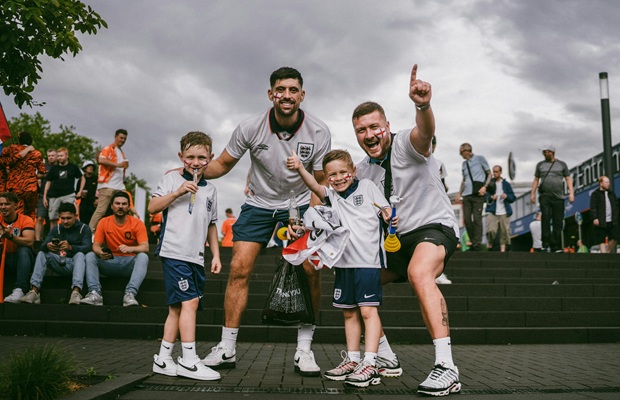
“The association between football and FMCG goes deep,” explains Patrick Finlay, Managing Director of The Category Management Company.
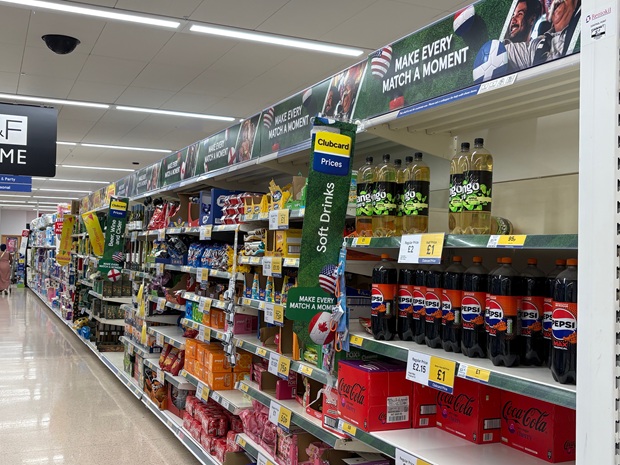 “The alcohol, snacks and ready meal categories will all undoubtedly spike, but the scale of and domestic interest in this tournament demands that both brands and retailers think bigger than that.”
“When 54% of adults are hosting, cooking, drinking, and entertaining in their own living rooms, perhaps repeatedly across a tournament that runs for weeks, the commercial opportunity extends beyond the obvious.”
Home-viewing occasions, Finlay adds, will extend to soft drinks for the kids and non-drinkers, sharing platters and dips, extra kitchen roll, paper plates for the table, and disposable cups and more.
“Shoppers who are hosting friends for a match will plan and stock up. They may do a big shop at the weekend and perhaps a click-and-collect during the week. The brands and retailers who will win in this World Cup summer will be the ones who make themselves part of that planning mindset.”
“Retailers with strong own-label propositions will have a particular advantage. The World Cup is an argument for premium own label sharing ranges, for the retailer’s own pizza, their own platter deal, their own drinks bundle. The World Cup is a vehicle for loyalty, not just to the team you’re supporting, but also to the supermarket you’re visiting.”
Tactical activation, Finlay says, will ask how you sell more of a particular product during the tournament. Strategic activation, in contrast, asks what the real occasion is, who is experiencing it, what do they need, and how you position a brand or category as essential to that moment.
“Strategically framed activation produces stronger ROI because it is more focused,” says Finlay. “It opens new doors. Categories that wouldn’t ordinarily claim a World Cup association suddenly now have a credible role to play. It extends reach by speaking to a broader consumer set. And it creates a more distinctive proposition for the brand, rather than simply taking part alongside everyone else in one crowded promotional moment.”
Premium grocery, for example, has a harder conversation to have during a period of stretched household budgets. But, Finlay continues, a strategic lens reframes the question.
“The challenge isn’t to compete on price, it’s to make a premium experience feel accessible and worth it. Platters that feed a crowd. Own-label bundles built around the occasion. Loyalty mechanics that reward the hosting mindset. That is a strategic response to a tactical pressure.”
And in terms of target audiences, tactical thinking defaults to the obvious: England fans, Scotland fans, the mainstream football fan. Strategic thinking, though, asks a more interesting question: who else is watching?
“The UK is home to large communities from many of the nations competing in this tournament, Brazil, Argentina, Morocco, Mexico, Colombia, Senegal. These communities watch. They host. They cook. They have their own emotional investment, their own viewing rituals, their own purchasing behaviour. International food ranges and world food aisles have a genuine and credible story to tell, but only if brands and retailers approach the occasion strategically rather than defaulting to the expected activation.”
And, says Finlay, any occasion, a seasonal event, a cultural moment, a product launch, a category review, benefits from a similar approach. Map the full consumer need. Identify the non-obvious opportunity. Think cross-category. Define the audience precisely, including the audience you’re not currently speaking to. Frame the value proposition around what the consumer actually needs, not just what is easiest to sell.
“Strategic thinking is not a function of scale. Apply it to everything, to your annual plan and to the World Cup, and the result will be the same: activations that are more focused, more differentiated, and more likely to deliver sustainable growth rather than a short-term spike. The brands and categories that understand this will not just have a better World Cup summer. They will build better habits of thinking. And that compounds over time.”
The Category Management Company works with brands and retailers to develop insight-led category strategies, occasion-based activation frameworks, research and training.
Comments are closed.